Broadway Premier Auto Service: Your Ultimate Destination for Quality Auto Care
Maintaining a vehicle involves more than responding to a warning light or arranging a repair after a breakdown. Regular inspections, timely servicing, accurate diagnostics, and appropriate replacement parts all contribute to vehicle safety and dependable performance. For drivers researching Broadway Premier Auto Service, understanding the essentials of quality auto care can make it easier to compare service options and make informed maintenance decisions.
From oil changes and brake inspections to tyre care, battery testing, and engine diagnostics, each maintenance task helps protect a different part of your vehicle. This guide explains common automotive services, the warning signs drivers should not ignore, and the questions worth asking before authorising a repair.
For more vehicle ownership and transportation information, explore the automotive content available on NovaSpath.
What Does Quality Auto Care Mean?
Quality auto care starts with understanding a vehicle’s condition and identifying the reason behind a reported problem. Instead of replacing components based on assumptions, a service provider should explain the inspection process, describe the findings, and outline the recommended work.
A good service experience also involves clear communication about costs, parts, labour, expected completion times, and any warranty terms that apply. These details help drivers understand what they are paying for and decide which repairs deserve immediate attention.
Drivers comparing automotive service information can also explore these related guides to vehicle maintenance and automotive care, car repair considerations, and essential vehicle care.
Essential Automotive Services Every Driver Should Understand
1. Engine Oil and Filter Changes
Engine oil lubricates moving components, reduces friction, and helps manage heat and contamination. As oil ages, its protective properties can deteriorate. Using the correct oil specification and following the manufacturer’s maintenance schedule are important steps in protecting engine performance.
Oil-change intervals vary according to the vehicle, engine, oil type, mileage, and driving conditions. Check the owner’s manual rather than relying on a single interval for every vehicle.
During routine servicing, ask whether the technician will also inspect for leaks and review any warning lights or unusual engine noises.
2. Brake Inspection and Repair
The braking system is essential to road safety. Brake pads, rotors, calipers, hydraulic components, and brake fluid must work together to provide predictable stopping performance.
Watch for warning signs such as grinding, persistent squealing, a soft brake pedal, vibration during braking, a brake warning light, or a noticeable change in stopping distance. These symptoms can have different causes and should be assessed rather than diagnosed by sound alone.
If the brakes become significantly less effective, stop driving when safe and arrange professional assistance. Do not postpone a potentially serious braking problem simply because the vehicle still moves normally.
3. Tyre Inspection and Replacement
Tyres affect grip, braking, steering, comfort, and fuel efficiency. Incorrect pressure, uneven tread wear, sidewall damage, and ageing rubber can all influence performance.
Check tyre pressure when the tyres are cold and follow the vehicle manufacturer’s recommended figures. Inspect the tread and sidewalls for cuts, bulges, embedded objects, or other visible damage. Repeated pressure loss should be investigated instead of being treated as a routine inconvenience.
For more detailed advice, read about tyre safety and vehicle performance, recognising when tyres need replacement, and how tyre rubber ages over time.
4. Wheel Alignment and Balancing
Wheel alignment ensures that wheel angles are set according to vehicle specifications. Incorrect alignment may contribute to uneven tyre wear, steering pull, or changes in handling. Wheel balancing addresses uneven weight distribution in a wheel-and-tyre assembly, which can cause vibration at certain speeds.
These are different services. If the steering wheel shakes, the vehicle pulls to one side, or the tyres wear irregularly, a technician should inspect the vehicle and determine which work is appropriate.
5. Battery and Electrical System Checks
A vehicle that struggles to start may have a weak battery, charging-system problem, poor connection, or electrical drain. Replacing the battery without checking the underlying cause may not solve the problem.
Common warning signs include slow engine cranking, intermittent starting, dim lights, and battery or charging-system alerts. Testing the battery and charging system can help identify the source of the fault.
6. Engine Diagnostics
Modern vehicles use electronic sensors and control modules to monitor many operating systems. Diagnostic tools can retrieve trouble codes and provide useful information, but a code does not automatically prove that a particular part has failed.
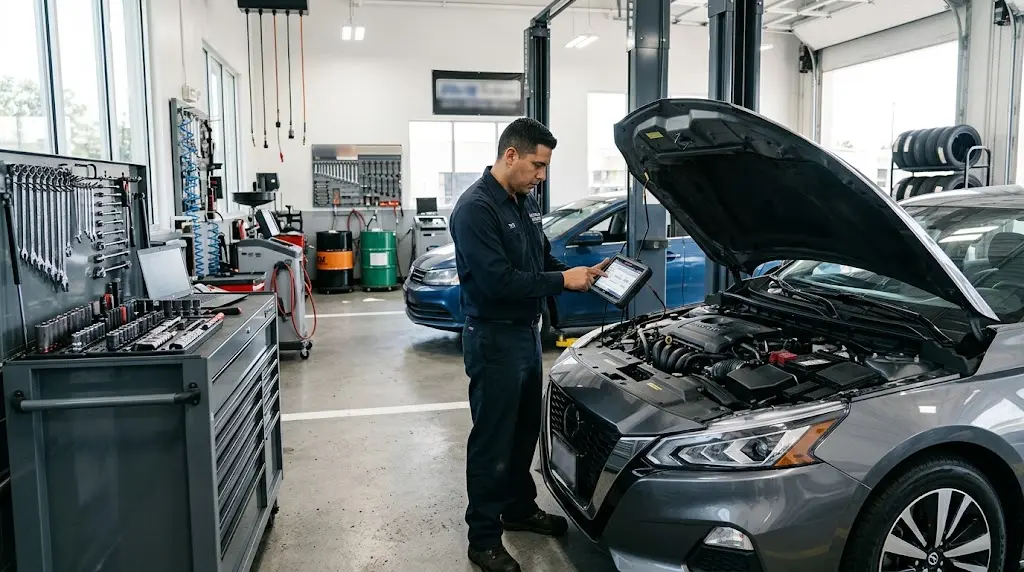
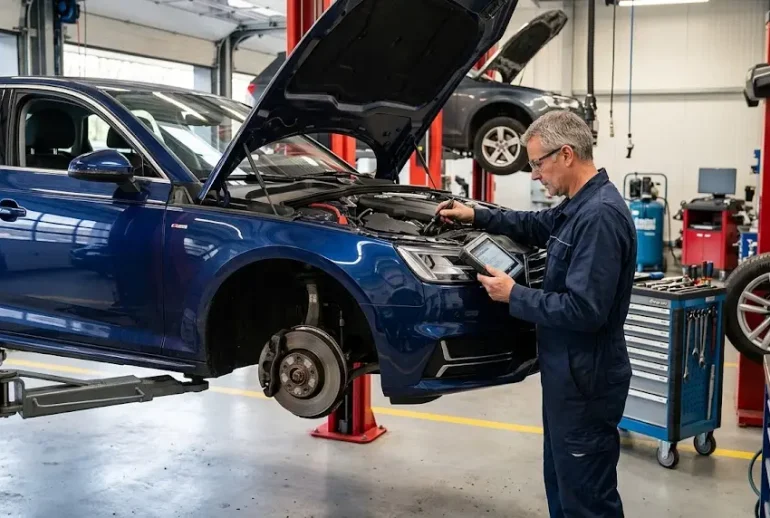
Accurate diagnosis may involve checking the driver’s description, reviewing stored codes, inspecting related components, and performing targeted tests. The objective is to find the cause of the symptom and verify that the recommended repair addresses it.
For additional background on automotive businesses and their digital presence, read automotive digital marketing and business performance.
Preventive Maintenance for Better Vehicle Reliability
Preventive maintenance helps drivers identify wear and developing faults before they become more disruptive. Although it cannot prevent every breakdown, a consistent maintenance routine can support safer driving and more predictable ownership costs.
Use the manufacturer’s maintenance schedule as your starting point, and consider the vehicle’s age, mileage, operating conditions, and inspection findings.
A Practical Vehicle Maintenance Checklist
- Engine oil: Check the level safely and follow the specified service interval.
- Tyres: Monitor cold pressure, tread condition, and visible damage.
- Brakes: Investigate changes in stopping performance, pedal feel, or noise.
- Coolant: Monitor levels when safe and investigate repeated fluid loss.
- Battery: Address slow starting or charging-system warnings.
- Lights: Check headlights, brake lights, indicators, and other essential lighting.
- Wipers: Replace blades that leave streaks or reduce visibility.
- Filters: Follow manufacturer guidance for engine and cabin air filters.
- Steering and suspension: Investigate knocking, excessive bouncing, or unusual handling.
- Service records: Keep invoices, inspection reports, and maintenance dates.
Driving conditions can affect maintenance needs. Frequent short journeys, dusty roads, heavy loads, stop-and-go traffic, and extreme temperatures may require additional attention under the vehicle manufacturer’s guidance.
How to Choose an Automotive Service Provider
Choosing an automotive workshop involves more than comparing the lowest price. Drivers should look for clear explanations, appropriate diagnostic procedures, written estimates, and relevant experience with their vehicle.
Ask for a Clear Diagnosis
Describe the symptoms, including when they occur, how frequently they appear, and whether any warning lights are illuminated. Ask what the inspection revealed and how the proposed work relates to the problem.
If the cause remains uncertain, ask which additional tests are needed and whether those tests involve separate charges.
Review the Written Estimate
A useful estimate should distinguish parts, labour, taxes, diagnostic fees, and other applicable charges. It should also explain whether the workshop will seek approval before performing additional work.
For major non-emergency repairs, a second opinion can help you compare recommendations. However, do not delay necessary safety repairs merely to obtain a lower price.
Understand Parts and Warranty Terms
Replacement parts may be original-equipment components, aftermarket alternatives, or remanufactured items. Suitability depends on the vehicle, component, quality, and intended use.
Ask which parts are proposed, why they are appropriate, and what warranty coverage applies. Confirm exclusions and whether the warranty covers parts, labour, or both.
Confirm the Workshop’s Actual Services
Before booking Broadway Premier Auto Service, verify its current location, opening hours, available services, technician qualifications, appointment requirements, and pricing directly with the business. Do not assume that every workshop offers specialist diagnostics, towing, same-day repairs, or emergency assistance.
Related NovaSpath guides about vehicle care and maintenance and tyre and automotive services provide additional reading for drivers comparing service options.
Understanding Automotive Repair Costs
Repair costs vary according to the vehicle, the fault, labour requirements, parts availability, and local pricing. A fair comparison should consider the full scope of work rather than the advertised price alone.
Before approving a repair, ask:
- What problem has been identified, and what evidence supports the diagnosis?
- Which repairs are essential for safe operation?
- Which items are preventive recommendations rather than urgent repairs?
- Are parts, labour, diagnostic fees, and taxes included in the estimate?
- Will the workshop contact me before adding unapproved work?
- What warranty applies to the parts and workmanship?
These questions help establish expectations and reduce misunderstandings. Keep the estimate and final invoice with your maintenance records so future technicians can understand what has already been repaired.
Preparing Your Vehicle for Daily Driving and Road Trips
A short inspection before a long journey can help reveal issues that deserve attention before departure. Check tyre condition and pressure, lights, wipers, fluid levels, and any warning indicators. Confirm that routine maintenance is up to date and address unusual noises, vibration, or handling changes.
For drivers who share regular journeys, planning more efficient daily commutes can complement responsible vehicle maintenance.
If your travel plans involve a longer drive, use destination planning alongside a vehicle-readiness checklist. NovaSpath’s guides to Southern Italy travel destinations, places to visit in St Andrews, Scotland, and unique places around the world can support travel inspiration while you plan the practical details of a journey.
Tyre Care for Special Driving Conditions
Tyres should match the vehicle’s approved specifications and the conditions in which it is driven. Load rating, speed rating, size, pressure, tread condition, and the type of terrain all matter.
Drivers considering run-flat tyres should understand their limitations and the conditions under which continued driving may be permitted after pressure loss. Explore the pros and cons of run-flat tyres before selecting a replacement option.
For off-road and sandy terrain, preparation becomes especially important. Review these sand-driving tyre tips and follow the vehicle and tyre manufacturers’ guidance. If pressure is adjusted for a specific off-road situation, restore the correct road pressure before returning to normal-speed paved driving.
Electric and Hybrid Vehicle Maintenance
Electric and hybrid vehicles still require tyre inspections, brake checks, suspension maintenance, cabin-filter servicing, and attention to warning lights. Their high-voltage electrical systems and specialised components, however, require appropriate knowledge and equipment.
Vehicle owners should not attempt to open or repair high-voltage battery systems themselves. Use a suitably trained professional for work involving high-voltage components and follow the vehicle manufacturer’s instructions.
Learn more about battery technology and the future of electric mobility.
Warning Signs That Should Not Be Ignored
Some symptoms warrant prompt assessment rather than waiting for the next scheduled service. These include:
- Significantly reduced braking performance.
- Sudden steering difficulty or loss of control.
- Engine overheating accompanied by warnings or steam.
- A tyre with a visible sidewall bulge or serious damage.
- Smoke, a burning smell, or a suspected fuel leak.
- Severe vibration or mechanical noise that makes driving unsafe.
If a serious problem occurs on the road, stop in a safe location when possible and arrange appropriate roadside assistance or towing. Never remove a hot cooling-system cap, and do not continue driving when the vehicle may be unsafe.
Frequently Asked Questions About Broadway Premier Auto Service
What services should I ask Broadway Premier Auto Service about?
Ask whether the workshop currently handles your vehicle’s required maintenance, such as oil changes, brake inspections, tyre services, battery testing, diagnostics, or suspension repairs. Confirm availability directly before booking.
How often should I service my vehicle?
Follow the maintenance schedule in your owner’s manual. Service intervals vary by make, model, mileage, component, and driving conditions.
How can I tell whether a repair is urgent?
Problems affecting braking, steering, tyre integrity, engine temperature, or safe vehicle control should be assessed promptly. Ask the technician to distinguish safety-critical repairs from maintenance that can reasonably be scheduled later.
Should I approve every repair recommended by a workshop?
Ask for the diagnosis, supporting evidence, estimated cost, and explanation of the risks of delaying the work. For significant non-emergency repairs, a second opinion may help you make an informed decision.
Does Broadway Premier Auto Service provide same-day or emergency repairs?
Current service availability has not been independently confirmed in this guide. Contact the business directly to verify opening hours, appointment options, turnaround estimates, and emergency services.
Final Thoughts
Quality auto care depends on consistent maintenance, accurate diagnosis, suitable replacement parts, and transparent communication. Understanding these fundamentals helps drivers make better decisions about repair priorities, costs, and vehicle safety.
When researching Broadway Premier Auto Service, confirm its current services, qualifications, pricing, location, and warranty terms before making a booking. Use the vehicle manufacturer’s maintenance schedule as a foundation and seek professional assessment when symptoms indicate a potential safety concern.
With a practical maintenance routine and informed service decisions, drivers can better manage ownership costs and support dependable vehicle performance over time.