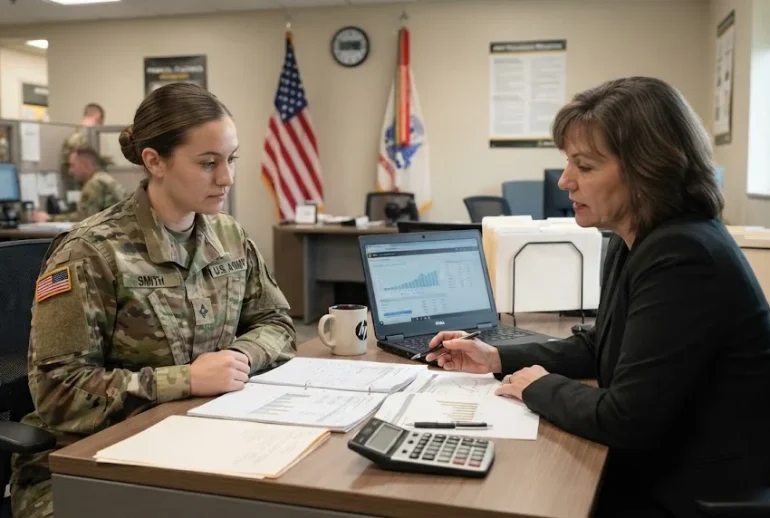
That distinction matters when you are trying to find the right office. Some installations place an Army Military Pay Office inside or near a Soldier Support Center, while others provide personal financial counseling through Army Community Service or a Military and Family Support Center. For example, official installation information shows finance services operating from Soldier Support Center facilities at Fort Campbell, Camp Walker in South Korea, and other locations.
This guide explains what soldiers and military families can generally expect, how pay and financial-readiness services differ, what documents to prepare, and where to look for reliable assistance.
What Does Soldier Support Center Finance Mean?
A Soldier Support Center is generally a central installation facility that brings multiple personnel and family-support services together. Depending on the installation, those services can include finance, personnel processing, transportation, housing assistance, relocation support, and other administrative functions.
Finance services are usually focused on official military pay and entitlements, while financial-readiness programs concentrate more heavily on personal money management. These functions can work together but are not necessarily the same office.
For example, an Army Military Pay Office may handle questions about pay, allowances, deductions, or processing related to a permanent change of station or separation. A personal financial counselor may instead help a service member build a budget, manage debt, improve savings habits, or prepare for retirement.
This distinction is useful because the right point of contact depends on the problem you are trying to solve.
Key Services You May Find at or Through a Soldier Support Center
Military Pay and Entitlement Questions
Military pay can include basic pay, allowances, special pays, deductions, and other entitlements. If something appears incorrect on a Leave and Earnings Statement, the installation finance office may be the appropriate place to begin.
The Defense Finance and Accounting Service military pay information provides official pay tables and entitlement references that can also help service members understand the components of their compensation.
When contacting a finance office, clearly identify the pay period involved and explain what appears incorrect. Having your relevant military and pay documentation available can make the conversation more productive.
PCS and Travel-Related Finance
Permanent changes of station can create several financial and administrative questions. Depending on the installation and transaction, soldiers may need assistance with travel claims, clearing requirements, relocation-related paperwork, or other PCS processes.
Fort Campbell, for example, identifies finance services within its Soldier Support Center for separations and PCS/travel-related matters. The exact services and procedures can vary by installation, so soldiers should check their local installation guidance before making a trip.
For broader relocation planning, it is also useful to understand how housing, transportation, household expenses, and emergency savings fit into the overall PCS budget.
Financial Readiness and Personal Budgeting
Financial readiness is different from simply correcting a pay problem. It involves understanding income, expenses, debt, savings, credit, insurance, retirement planning, and financial goals.
Military OneSource states that service members and eligible family members can access free financial counseling. Counselors can help with budgeting, debt reduction, savings, retirement and investment planning, and conversations with creditors.
If your concern is broader than a specific pay transaction, a personal financial counselor may therefore be more appropriate than a military pay office.
Debt Management
Debt can become harder to manage during deployments, PCS moves, family changes, or periods of unexpected expenses. Financial-readiness professionals can help service members review their obligations and develop a realistic repayment strategy.
The goal should not simply be to obtain another loan. A stronger approach is to understand the interest cost, monthly payment, repayment period, and effect on the rest of the household budget before taking on new debt.
Retirement and Long-Term Financial Planning
Military financial readiness also extends beyond immediate cash-flow problems. Service members may need to think about emergency savings, retirement contributions, investment choices, insurance, education expenses, and their eventual transition from military to civilian employment.
Military OneSource provides financial-management resources covering savings, retirement, investments, credit, debt, and financial planning. These resources can complement installation-based counseling.
Finance Office vs. Financial Readiness Counselor
One of the easiest ways to avoid being sent to the wrong office is to separate administrative finance questions from personal financial-planning questions.
- Military pay issue: Start with your installation’s finance or Army Military Pay Office.
- Pay or allowance question: Use the appropriate finance/pay channel and verify the applicable entitlement rules.
- PCS or separation processing: Follow your installation’s finance and out-processing instructions.
- Budgeting: Consider an installation financial-readiness program or personal financial counselor.
- Debt concerns: Seek financial counseling before adding new credit.
- Retirement planning: Use military financial-readiness resources and appropriate retirement-planning guidance.
These services may be located in the same building, but that does not mean they perform the same function.
How to Prepare for a Finance Appointment
Good preparation can save time. Before contacting an installation finance office or counselor, collect the information connected to your question.
- Current Leave and Earnings Statement, when relevant
- Orders or PCS documentation, when the issue concerns relocation
- Separation or retirement paperwork, when applicable
- Bank account information required for the transaction
- Relevant receipts and travel documents
- Questions about specific deductions or allowances
- A basic list of monthly income and expenses for budgeting appointments
- Outstanding debts and recurring payment obligations when discussing debt
Do not provide sensitive financial information to an unverified person or website. Use official installation channels and recognized military support resources when handling personal or pay-related information.
How to Find the Correct Soldier Support Center Finance Service
Because installation structures differ, searching for a generic “Soldier Support Center Finance” office may not produce the correct result. Start with the installation where you are stationed and identify the specific service you need.
- Identify your current Army installation.
- Determine whether your issue involves military pay, PCS/separation processing, or personal financial planning.
- Check the installation’s official finance or Army Community Service information.
- Confirm whether an appointment is required.
- Review current office instructions before traveling to the building.
- Bring the documents relevant to your transaction.
Military OneSource can also connect eligible service members and families with financial counseling and other support. Its financial counseling service is available by phone, online, and through installation programs.
For official military financial information, the Military OneSource financial counseling resource is a useful starting point.
Why Military Financial Readiness Matters
Financial readiness is more than having enough money in a checking account. It means having a workable plan for routine expenses, unexpected costs, debt, savings, and long-term goals.
Military life can introduce financial variables that require additional planning. A PCS can change housing and transportation costs. Deployment can change household routines. Family circumstances can affect expenses. Career transitions can change income.
A practical financial plan should therefore account for both predictable and unexpected changes rather than relying on a single monthly snapshot.
Build an Emergency Fund
An emergency fund can provide a buffer when an unexpected repair, travel requirement, or household expense appears. The appropriate amount depends on your income, expenses, dependents, debts, and overall financial situation.
Track Recurring Expenses
Review housing, transportation, insurance, food, subscriptions, debt payments, and other recurring costs. A clear expense list makes it easier to identify where your cash flow is going and where adjustments may be possible.
Understand Your Pay and Allowances
Rather than focusing only on your total deposit, understand the components that make up your compensation. Official military pay resources can help you identify applicable pay tables and allowance information.
Use Free Financial Counseling When Available
You do not have to wait until a financial problem becomes serious. Military financial counselors can help service members and eligible family members review financial goals, debt, savings, retirement, and other personal-finance questions.
Common Mistakes to Avoid
- Assuming every Soldier Support Center has identical services: Installation organizations differ.
- Confusing pay administration with financial counseling: The two services address different needs.
- Waiting until a PCS or separation deadline: Start finance-related processing early enough to understand local requirements.
- Taking new debt without reviewing the full cost: Consider interest, fees, payment size, and repayment duration.
- Relying on unofficial pay information: Verify important pay and entitlement questions through official military resources.
- Ignoring small recurring expenses: Several modest monthly charges can materially affect available cash flow.
How Soldier Support Center Finance Fits Into the Wider Military Finance System
Installation-level finance support is only one part of the military financial system. The Defense Finance and Accounting Service provides centralized payment and accounting services, while Army financial-management organizations oversee broader financial operations and policy.
The Army Financial Management and Comptroller provides information about Army financial management and related policy responsibilities. For individual service members, however, the local installation finance office may still be the most practical first stop for a specific pay or processing question.
Military OneSource also provides financial-management education and counseling. Its resources cover budgeting, debt, credit, savings, retirement, financial benefits, and related topics.
Frequently Asked Questions
Is Soldier Support Center Finance a nationwide military program?
Not as a single standardized program with identical services at every installation. Soldier Support Centers can house or connect service members with different finance, personnel, relocation, and family-support functions depending on the installation.
Can a Soldier Support Center help with military pay?
At some installations, yes. An Army Military Pay Office or finance function may operate inside or through a Soldier Support Center. The exact responsibilities depend on the installation.
Can financial counselors help with debt?
Yes. Military OneSource financial counseling can help eligible service members and families understand debt, budgeting, credit, savings, and other personal-finance concerns.
Where should I go for a pay discrepancy?
Start with your installation’s finance or Army Military Pay Office and follow its current procedures. DFAS resources can also provide official information about military pay and entitlements.
Does a financial counselor provide loans?
Financial counseling is primarily intended to provide education, planning, and guidance. It should not be confused with a lender or loan provider. A counselor can help you evaluate your financial situation before you decide whether additional borrowing is appropriate.
Can military families receive financial counseling?
Eligible military family members can access financial counseling through Military OneSource and installation financial-readiness programs. Eligibility rules can vary by service and circumstance.
Final Takeaway
Soldier Support Center finance services can be an important entry point for military personnel dealing with pay questions, PCS processing, separation paperwork, or financial-readiness needs. The key is identifying which type of help you actually need.
For a pay or entitlement issue, begin with the appropriate installation finance or Army Military Pay Office. For budgeting, debt, savings, or long-term planning, a financial-readiness counselor may be the better resource. Official military sources such as DFAS and Military OneSource can help you verify information and find appropriate support.
For additional financial topics, explore NovasPath’s coverage of the Fort Moore finance office, Fort Jackson finance services, and broader fintech developments.