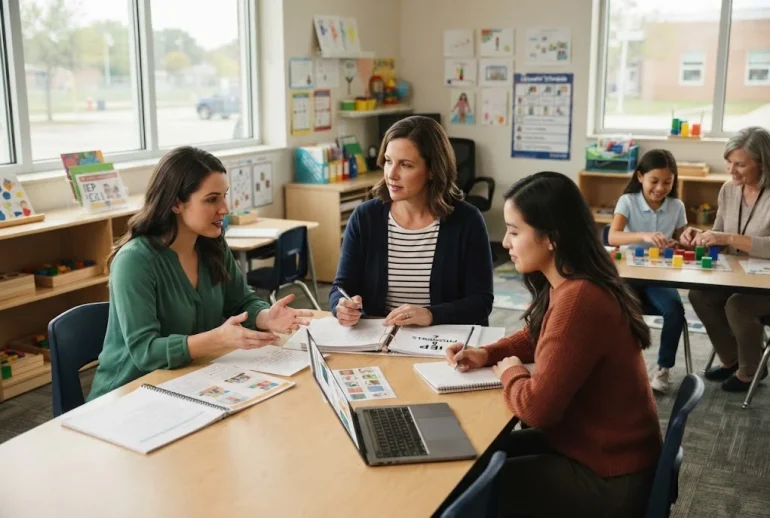
Although the exact responsibilities vary by school district and state, coordinators commonly provide leadership around Individualized Education Programs (IEPs), staff support, assessments, documentation, compliance, instructional planning, and communication with families. The position combines educational knowledge with organization, collaboration, advocacy, and problem-solving.
What Is a Special Education Coordinator?
A special education coordinator is an education professional who helps oversee special education programs and services within a school, group of schools, or district. Rather than focusing only on one classroom, the coordinator often works across multiple teams to help ensure that students’ educational needs are identified and addressed.
The position can look different from one district to another. Some coordinators concentrate primarily on program administration and compliance, while others provide instructional coaching, facilitate IEP meetings, support assessments, supervise staff, or help coordinate related services.
Current school-district job descriptions commonly describe the position as providing leadership, coordination, staff support, IEP oversight, professional development, and compliance assistance. The specific combination depends on the employer and the students served.
What Does a Special Education Coordinator Do?
The daily work of a coordinator can involve both strategic planning and immediate problem-solving. A typical schedule may include reviewing student records, meeting with teachers, participating in IEP meetings, analyzing assessment information, communicating with families, and helping staff address instructional or behavioral concerns.
Coordinate Special Education Programs
Coordinators help organize special education services so that different professionals are working toward compatible goals. This can include coordinating instructional programs, assessments, placements, related services, documentation, and staff responsibilities.
Effective coordination reduces the risk of fragmented support. When teachers, specialists, administrators, and families understand their responsibilities, it becomes easier to maintain continuity for the student.
Support the IEP Process
Individualized Education Programs are central to special education. Under the Individuals with Disabilities Education Act (IDEA), an IEP is a written plan that describes a child’s present levels of academic achievement and functional performance, measurable annual goals, progress measurement, and the special education, related services, supplementary aids, and other supports to be provided.
A coordinator may facilitate or participate in IEP meetings, help teams interpret assessment information, monitor timelines and documentation, and support staff with implementation. The coordinator does not replace the IEP team; instead, the role is often to help the team function effectively.
IDEA also establishes requirements for IEP team participation, including parents, appropriate educators, a public-agency representative, and other individuals with relevant knowledge or expertise. Federal IDEA guidance on IEP teams provides the governing framework for these requirements.
Monitor Student Progress
Special education coordinators may review assessment results, progress reports, classroom information, behavioral data, and other evidence to help teams determine whether supports are working.
The purpose is not simply to collect information. Progress data can help educators identify where a student is making gains, where additional support may be needed, and whether instructional strategies should be adjusted.
Collaborate With Teachers
Teachers often need practical support when implementing accommodations, specially designed instruction, behavior strategies, or other services. Coordinators can provide coaching, resources, consultation, and professional development.
This collaborative function is particularly valuable when a student has needs that require several educators or specialists to coordinate their approaches.
Communicate With Families
Families are important participants in special education decision-making. A coordinator may help families understand school processes, participate in meetings, communicate concerns, and connect with appropriate school personnel.
Strong communication should be clear, respectful, and focused on the student’s needs. It can also help prevent misunderstandings when educational decisions involve multiple professionals or complex documentation.
How Special Education Coordinators Support Students
The coordinator’s impact is often indirect but significant. Instead of providing every service personally, the coordinator helps build the system through which services are delivered.
- Individualized support: Helping teams organize services around individual student needs.
- Instructional consistency: Supporting educators in implementing appropriate strategies.
- Progress monitoring: Encouraging teams to use meaningful information when reviewing student progress.
- Family participation: Helping maintain communication between families and school teams.
- Service coordination: Supporting collaboration among educators and related service providers.
- Transition planning: Helping teams prepare students for changing educational stages and, when appropriate, life after high school.
IDEA recognizes a range of related services that may help a child benefit from special education, including speech-language pathology, psychological services, occupational and physical therapy, counseling, school health services, social work services, and transportation when required. The federal definition of related services explains the scope of these supports.
Special Education Coordinator vs. Special Education Teacher
Although the two positions work closely together, their responsibilities are not identical.
| Special Education Teacher | Special Education Coordinator |
|---|---|
| Works directly with students in instructional settings. | Often provides program-level or school-level coordination. |
| Implements instruction and student-specific supports. | Supports staff with implementation and program planning. |
| Monitors student progress within assigned responsibilities. | May review progress information across programs or teams. |
| Participates in IEP development and implementation. | May facilitate, coordinate, or oversee aspects of the IEP process. |
| Communicates with families about classroom and student needs. | May provide broader coordination and communication support. |
The boundaries vary among school systems. In some districts, a coordinator may also have direct teaching, assessment, or supervisory responsibilities.
Skills Needed for the Role
Because the position sits at the intersection of instruction, administration, compliance, and collaboration, successful coordinators need a broad professional skill set.
Communication
Coordinators communicate with educators, administrators, families, specialists, and sometimes outside agencies. They must be able to explain complicated information in a clear and respectful manner.
Organization
Special education programs involve meetings, documentation, assessments, deadlines, service schedules, student records, and many moving parts. Strong organizational skills help prevent important responsibilities from being overlooked.
Leadership
Coordinators frequently guide teams without necessarily being the direct supervisor of every person involved. They need to build cooperation, provide constructive feedback, and help teams work toward common goals.
Data and Assessment Skills
Understanding educational assessments and progress information allows coordinators to participate meaningfully in decisions about instruction and support. Data should be interpreted in context rather than treated as the sole measure of a student’s development.
Problem-Solving
Students’ needs can change, staffing can be limited, and educational plans may require adjustments. Coordinators need practical strategies for resolving problems while keeping the student’s needs and legal requirements in view.
Education and Qualifications
There is no single nationwide educational pathway that applies identically to every special education coordinator position. Requirements can vary considerably by state, district, and role.
Many positions expect experience in special education along with an advanced degree, teaching or administrative credentials, or other relevant qualifications. Some employers may require a master’s degree and state-specific certification, while others structure the position around existing educator credentials and professional experience.
For anyone considering this career, the best starting point is to examine the requirements published by the school districts and state education agencies where they intend to work. State licensing rules can differ, so a qualification that applies in one state may not automatically satisfy requirements in another.
Licensing, Compliance, and IDEA
Special education coordinators frequently work within a regulatory environment shaped by IDEA and state education requirements. Their responsibilities may include helping schools maintain appropriate documentation, follow established procedures, and provide services consistent with students’ educational plans.
Compliance is important because special education is not simply a collection of optional classroom interventions. Federal law establishes requirements concerning evaluation, eligibility, IEP development, services, parent participation, procedural safeguards, and other aspects of special education.
Coordinators should therefore maintain current knowledge of federal and state requirements rather than relying solely on past training. The U.S. Department of Education’s IDEA policy guidance is a useful starting point for current federal guidance and policy materials.
Technology in Special Education Coordination
Technology can make coordination more manageable when it is used appropriately. Schools may use digital systems to organize student information, document services, track progress, communicate with staff, and manage IEP-related workflows.
Assistive and instructional technologies can also support students directly. Depending on individual needs, technology may assist with communication, reading, writing, organization, accessibility, or participation in classroom activities.
However, technology should support professional judgment rather than replace it. A digital tool is most useful when it addresses a clearly identified educational need and fits the student’s learning environment.
Challenges Faced by Special Education Coordinators
The position can be demanding because coordinators often balance student needs with staffing, schedules, resources, legal requirements, and competing priorities.
Managing Multiple Priorities
A coordinator may be responsible for several students, educators, meetings, and programs at once. Prioritization becomes essential when urgent student or staff concerns arise alongside routine responsibilities.
Staffing and Resource Constraints
Schools may face difficulties recruiting qualified professionals or providing all the resources that teams would ideally like to have. Coordinators must often help staff use available resources effectively while identifying additional support when possible.
Complex Communication
Special education decisions can involve sensitive topics and differing perspectives. Coordinators need to create productive conversations without losing sight of the student’s educational needs or applicable requirements.
Keeping Up With Requirements
Federal guidance, state rules, district policies, and professional practices can evolve. Ongoing professional development is therefore an important part of effective coordination.
How Coordinators Build Inclusive Learning Environments
Inclusion is not achieved simply by placing students with disabilities in general education classrooms. Students also need appropriate access, supports, accommodations, services, and instructional strategies.
A coordinator can help schools examine whether those systems are functioning effectively. This may involve collaborating with general education teachers, special education staff, administrators, specialists, students, and families.
IDEA also requires public agencies to take steps that provide children with disabilities an equal opportunity to participate in nonacademic and extracurricular services and activities when appropriate supplementary aids and services are needed. That broader perspective reinforces the importance of looking beyond classroom instruction alone.
What Does a Special Education Coordinator Do Every Day?
There is no universal daily schedule, but common activities can include reviewing student information, supporting IEP meetings, consulting with teachers, communicating with families, coordinating services, monitoring documentation, reviewing progress data, providing staff development, and responding to student-specific concerns.
Is a Special Education Coordinator a Leadership Position?
Often, yes. Coordinators commonly provide instructional, programmatic, and procedural leadership. However, whether the role includes formal supervision or administrative authority depends on the school district and the specific position.
What Is the Difference Between an IEP and Special Education Services?
An IEP is the written plan that identifies a student’s educational needs, measurable goals, services, supports, and other required information. Special education and related services are the actual supports and instruction provided in accordance with the student’s educational program.
Why Is Coordination Important in Special Education?
Students may receive support from several people, including teachers, specialists, counselors, administrators, and families. Coordination helps those participants communicate and work from a consistent understanding of the student’s needs, services, goals, and progress.
How Can Schools Strengthen Special Education Coordination?
Schools can strengthen coordination by providing clear responsibilities, supporting professional development, maintaining effective communication systems, monitoring implementation, using meaningful student data, and ensuring that staff understand applicable special education procedures.
Final Thoughts
A special education coordinator plays an important organizational and leadership role in helping schools provide effective support for students with disabilities. The work extends beyond paperwork. It involves bringing people together, supporting educators, coordinating services, facilitating communication, monitoring implementation, and helping teams respond to individual student needs.
The strongest coordinators combine knowledge of special education with communication, organization, collaboration, and thoughtful problem-solving. When those skills are supported by appropriate professional preparation and current knowledge of special education requirements, coordination can help schools create more consistent and responsive educational experiences for students and their families.