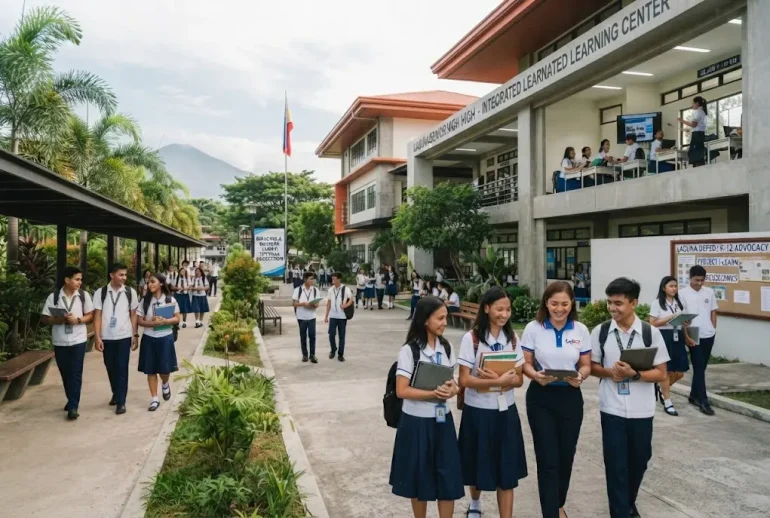
For families, educators, school administrators, and education stakeholders, understanding how the Schools Division Office of Laguna works can make it easier to find information about learning programs, teacher development, school operations, assessments, special needs education, and other education initiatives.
The division’s current activities show that education in Laguna extends beyond classroom instruction. Recent official memoranda cover teacher training, learning recovery, school safety, alternative learning, research, learning resources, technology, career development, and learner support.
What Is the Laguna Department of Education?
The term “Laguna Department of Education” can be misleading because education administration in the province is part of the national Department of Education (DepEd) system. At the local level, the Schools Division Office of Laguna performs division-level education management and support functions.
The official SDO Laguna website provides information about its mandate, organizational structure, officials, programs, memoranda, and other education-related activities. Its organizational structure illustrates the different functions required to support schools and learning programs throughout the division.
For official information about the division’s leadership and mandate, readers can consult the official SDO Laguna mandate, vision, mission, and directory.
Key Responsibilities of the Schools Division Office of Laguna
The Schools Division Office plays an important role between national education policies and their implementation at the school level. Its responsibilities cover educational programs, school support, teacher development, learning resources, administration, monitoring, and other operational areas.
The official organization chart provides a useful view of how the Schools Division Office of Laguna is organized.
Curriculum Implementation
One of the division’s central responsibilities is supporting schools as they implement the national curriculum. This includes helping educators understand curriculum changes, providing technical assistance, coordinating training, and supporting the use of appropriate learning resources.
Current division activities demonstrate continued attention to curriculum implementation. For example, 2026 memoranda include division-led training related to revised Grades 6, 9, and 10 curriculum requirements.
Teacher Professional Development
Quality education depends heavily on teachers having opportunities to strengthen their knowledge and classroom practices. The SDO Laguna’s activities include in-service training, professional development initiatives, learning action cell activities, and other capacity-building programs.
Recent 2026 memoranda include updates concerning School Year 2026–2027 in-service training for teachers, professional development interventions for school heads, and activities supporting educators’ communication and technology skills.
Teacher development also connects with broader education topics such as the responsibilities of a special education coordinator, particularly when schools need coordinated support for learners with different educational needs.
Learning Recovery and Academic Support
Learning recovery remains an important area for schools seeking to address gaps in student knowledge and skills. Rather than relying only on regular classroom instruction, targeted programs can provide additional opportunities for learners who need academic support.
SDO Laguna’s 2026 division memoranda include activities related to the Academic Recovery and Accessible Learning (ARAL) Program and the Learn to Improve, Nurture, and Guide (LearnING) Program.
These initiatives demonstrate the importance of identifying learning needs and using structured interventions to help students progress. Learning recovery can include remediation, targeted instruction, monitoring, assessment, and appropriate learning resources.
Alternative Learning System in Laguna
Traditional school pathways do not work equally well for every learner. The Alternative Learning System (ALS) provides another route for eligible learners who are unable to participate in or complete conventional formal education pathways.
SDO Laguna’s current activities include participation in training for ALS teachers on the revised ALS K to 10 curricula. This highlights the division’s continuing role in supporting alternative learning educators and program implementation.
For learners and families researching education options, ALS can be an important part of understanding the broader education system beyond conventional elementary and secondary schooling.
Special Needs and Inclusive Education
Inclusive education recognizes that learners have different abilities, circumstances, learning requirements, and support needs. Schools therefore need systems that allow students to participate meaningfully in education while receiving appropriate assistance.
Special needs education is also reflected in the division’s official activities. A 2026 SDO Laguna memorandum addressed the implementation review and plan adjustment of the Special Needs Education (SNED) Program.
This area is particularly relevant to teachers, parents, school administrators, and education professionals interested in how schools coordinate support for learners who require additional educational assistance.
Understanding roles such as the special education coordinator can provide additional context about how specialized educational support can be organized within schools.
Learning Resources and Educational Technology
Modern education increasingly depends on reliable learning resources and appropriate technology. Digital tools can support instruction, communication, research, assessment, and access to educational materials when they are implemented effectively.
SDO Laguna’s official 2026 activities include learning-resource monitoring, validation of school learning resource situation reports, Learner Information System activities, and initiatives related to communication and technology skills.
Technology should not replace effective teaching. Instead, it can complement classroom instruction by helping educators provide different forms of content, organize information, and support learners with varied needs.
School Safety and Learner Protection
A strong education system also requires safe and supportive learning environments. Schools need procedures for emergency preparedness, security, learner protection, and continuity of education during challenging situations.
Recent SDO Laguna memoranda include school safety and security protocols, preparedness activities, earthquake drills, and participation in nationwide school safety drills. These activities demonstrate that school management involves much more than curriculum and examinations.
Safety planning can help schools prepare staff and learners to respond appropriately to emergencies while maintaining a learning environment where students can focus on their education.
School-Based Feeding and Learner Well-Being
Learner well-being is another important part of educational support. Students’ ability to participate successfully in school can be affected by factors outside academic instruction, including nutrition and access to basic support.
The official SDO Laguna memoranda include implementation activities for the School-Based Feeding Program (SBFP) for School Year 2026–2027. Such programs demonstrate how education administration can include initiatives designed to support learners’ broader needs.
Career Guidance and Future Opportunities
Education should prepare learners not only for examinations but also for future academic, technical, and career pathways. Career guidance can help students understand potential opportunities and make more informed decisions about their next steps.
SDO Laguna’s recent division memoranda include activities related to career guidance as well as programs connected with technical-vocational education and senior high school pathways.
These initiatives can be especially valuable for students approaching major transitions, such as moving from junior high school to senior high school or considering technical and vocational opportunities.
Research and School Improvement
Education systems benefit from decisions based on evidence rather than assumptions. Research can help schools and education administrators identify challenges, evaluate approaches, and develop better strategies for improving learning outcomes.
SDO Laguna’s 2026 activities include calls for research proposals and references to the Basic Education Research Fund (BERF). Research-related activities form part of the broader effort to support evidence-informed education management.
School improvement planning is similarly important because each school may face different learner, resource, infrastructure, and community needs. Local planning allows schools to prioritize practical improvements within their specific context.
Professional Development for School Leaders
Teachers are not the only education professionals who require continuous development. School heads and administrators also need opportunities to strengthen leadership, planning, governance, and operational skills.
SDO Laguna’s current activities include the National Assessment for School Heads Professional Development Intervention (NASH PDI), including implementation and reporting activities during 2026.
Strong school leadership can influence how effectively curriculum initiatives, teacher development, learner support, school safety, and community programs are implemented.
Community Partnerships and School Support
Schools do not operate independently of their communities. Parents, local government units, organizations, education partners, and other stakeholders can contribute to school improvement and learner support.
The division’s official memoranda include activities involving Brigada Eskwela, school preparedness, community-related initiatives, and partnerships connected with school infrastructure and educational programs.
Community participation can be particularly valuable when schools need additional support for facilities, learning resources, student activities, environmental initiatives, or other local priorities.
How to Find Current Information From SDO Laguna
Because education programs, schedules, requirements, and administrative activities can change, readers should check official sources rather than relying on old articles or social media posts.
The SDO Laguna Division Memorandum 2026 page is particularly useful for checking current announcements and official activities. The page contains notices covering areas such as teacher training, curriculum implementation, school safety, learner information systems, research, ALS, school feeding, and other division-level programs.
For broader national education policies and official announcements, the Department of Education Philippines website is another important source.
Why the Laguna Education System Matters to Learners and Families
For parents and learners, the education system can sometimes appear complicated because many programs operate at national, regional, division, and school levels. Understanding the role of SDO Laguna can make it easier to identify where different responsibilities and announcements originate.
Families may encounter information about curriculum changes, enrollment, learning recovery, special needs education, school safety, feeding programs, career guidance, or alternative learning. Teachers may encounter professional development, learning resources, research, and administrative requirements.
These different activities are interconnected. Effective education requires curriculum implementation, capable educators, appropriate resources, learner support, safe schools, responsible administration, and ongoing improvement to work together.
Frequently Asked Questions About the Laguna Department of Education
Is there a separate Laguna Department of Education?
Education in Laguna is part of the national Department of Education system. At the division level, education administration is handled through the Schools Division Office of Laguna. The phrase “Laguna Department of Education” is commonly used informally when referring to education administration in the province.
Where can I find official SDO Laguna announcements?
Official announcements and division memoranda are published through the SDO Laguna Division Memorandum page. Because announcements can change, checking the latest official publication is preferable to relying on older third-party information.
Does SDO Laguna support special needs education?
Yes. Special Needs Education is part of the division’s education activities, and official 2026 memoranda include an implementation review and plan adjustment for the SNED Program.
Does Laguna support Alternative Learning System programs?
Yes. SDO Laguna’s official activities include participation in training related to the revised ALS K to 10 curricula, supporting teachers involved in alternative learning.
How does SDO Laguna support teachers?
Teacher support includes professional development, in-service training, learning action cell activities, curriculum-related training, and other capacity-building initiatives. Current division memoranda provide evidence of ongoing professional development activities.
Where can I check the SDO Laguna organizational structure?
The official SDO Laguna organization chart provides information about the division’s organizational structure and offices.
Final Thoughts
The Laguna Department of Education, more accurately understood through the Schools Division Office of Laguna, plays an important role in supporting education across the province. Its responsibilities extend from curriculum implementation and teacher development to learning recovery, alternative learning, special needs education, school safety, technology, research, career guidance, and learner well-being.
For parents, students, educators, and other stakeholders, the best way to stay informed is to use current official DepEd and SDO Laguna information. Education programs and administrative requirements can change from one school year to another, making official memoranda and government resources especially valuable.
As Laguna’s education system continues to respond to changing learner needs, professional requirements, curriculum developments, and technology, continued coordination between schools, educators, families, government agencies, and communities will remain essential to creating effective learning opportunities.