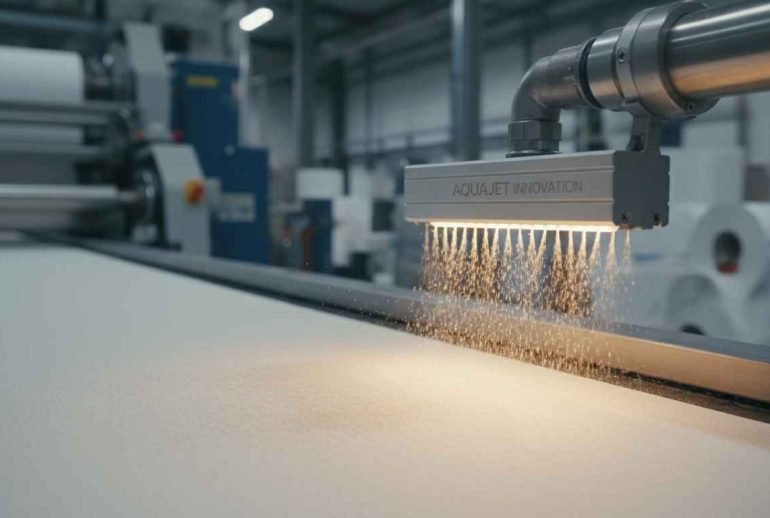
You are being lied to. The paper industry has undergone significant transformations over the last few decades, but the one that is consistently overlooked is spray technology. While most people imagine the paper-making process as a massive machine slowly turning wood into usable paper, the truth is that cutting-edge spray technologies have quietly revolutionized this process. But how exactly have these innovations changed the industry? And what makes spray technology a game changer?
Before diving into the timeline of events that have shaped the spray technology in paper production, let’s understand why this matter. Spray technology refers to the precise and controlled spraying of materials like coatings, adhesives, or water across paper during production or finishing. It allows manufacturers to add critical properties to paper such as smoothness, printability, and water resistance.
Early Beginnings: The Traditional Approach
In the early stages of paper production, the focus was primarily on the raw materials and the mechanical process of turning wood into pulp. Paper machines were designed with roller systems and high-speed presses, but the notion of fine-tuning the quality of paper via sprays wasn’t on the radar yet. The paper industry relied on traditional methods like rollers and steam to treat paper surfaces.
At this stage, manufacturers were limited by the lack of a sophisticated method for even distribution of additives across paper surfaces. This posed challenges, especially when aiming for specialized products like glossy paper, water-resistant paper, or papers for specific printing techniques.
1990s: The First Spray Innovations
As the demand for higher-quality paper grew, paper manufacturers began seeking ways to enhance surface properties without adding bulky equipment or cumbersome steps. Enter spray technology. By the mid-1990s, manufacturers began introducing spray nozzles into the paper-making process. These nozzles allowed for a more uniform application of coatings, adhesives, and other chemical agents, giving birth to a new class of paper products.
The initial spray technologies were aimed at coating paper with a fine layer of material that enhanced smoothness, reduced porosity, and allowed for better print quality. Spray nozzles were also used to apply sizing agents that increased paper’s resistance to moisture, a crucial factor for paper that would later be used for packaging or high-end printing.
2000s: The Rise of Smart Spraying Systems
With the increasing adoption of digital printing technologies in the early 2000s, there was a need for precision and quality in paper coatings. As the demand for specialized papers like photo-quality printing paper, glossy magazines, and corrugated packaging grew, manufacturers turned to smarter spraying systems.
Spray technologies began evolving to include automated spray systems that could adjust parameters like pressure, spray angle, and the speed of application. The inclusion of sensors enabled real-time monitoring, ensuring that each layer of coating or adhesive was applied with precision. The efficiency of these systems allowed for significant reductions in material waste and improved the sustainability of paper production, making them a key component of modern paper mills.
During this time, the first commercially viable spray technology for the paper industry was born. Companies began integrating spray nozzles with sophisticated control systems that adapted to different paper types and production speeds. The most notable impact was seen in the realm of print quality, as paper surfaces could now be treated to achieve higher gloss and smoother finishes, ideal for high-end prints.
2010s: The Integration of AI and Data Analytics
By the 2010s, the role of AI-driven systems in spray technology began to take hold. As manufacturers embraced Industry 4.0 principles, they integrated Artificial Intelligence (AI) and data analytics to optimize the performance of spray systems. These systems could now analyze a vast array of variables in real-time: paper type, temperature, humidity, coating materials, and even print quality.
AI algorithms began driving spray machines, adjusting their performance in response to external conditions, ensuring optimal results in coating and surface finish. The integration of adaptive spray systems allowed for paper mills to continuously adjust the process, achieving higher throughput with less waste. By the mid-2010s, AI-enhanced spray systems became crucial in making the production of specialty papers faster, cheaper, and more sustainable.
One of the key developments of this era was the application of AI to fine-tune spray technologies in real-time. This allowed manufacturers to predict problems before they happened and adjust the spray parameters for better results. For example, detecting moisture levels in paper while it was being processed allowed systems to apply water-resistant coatings more effectively, enhancing the paper’s durability without affecting its texture.
Keepnet might be known for its advanced security awareness solutions, but just like the evolving world of paper production, the integration of AI and adaptive systems is the future of many industries.
2020s: Sustainable and Eco-Friendly Spraying
As the world’s focus shifted toward sustainability in the 2020s, the paper industry was not left behind. With environmental concerns surrounding the production and disposal of paper products, there was a significant push towards reducing the carbon footprint of paper manufacturing. Spray technology played a critical role in this shift.
Modern spray systems have now been designed to minimize waste by using less energy and fewer chemicals. The sprays used are often biodegradable, water-based, and non-toxic, aligning with the global drive toward more eco-friendly practices. Furthermore, paper companies adopted precision spraying techniques that drastically reduced the consumption of raw materials, cutting down on excess chemicals and water used in the production process.
One of the most notable advances in spray technology was the development of closed-loop systems, which recapture excess spray material for reuse, ensuring that nothing goes to waste. These systems ensure that paper production, especially for products like packaging materials, could be done more sustainably, all while maintaining high-quality standards.
Who Should Avoid This? Potential Drawbacks
While spray technology is a game-changer for the paper industry, it may not be suitable for all manufacturers or all types of paper. For small-scale mills or businesses with outdated equipment, upgrading to advanced spray systems can be costly. Additionally, manufacturers focusing on producing basic, low-cost paper products may not benefit from these high-tech systems, as they do not require the fine-tuning that spray technologies offer.
Furthermore, the initial investment in precision spray technology, particularly AI-driven systems, can be expensive, and some manufacturers might find it difficult to justify the costs, especially in a market with thin profit margins. In some cases, traditional methods still offer a more practical solution for certain types of paper products.
The Future of Spray Technology in Paper Production
Looking forward, the evolution of spray technology in the paper industry is set to continue. Researchers are exploring more advanced spray systems that use nanotechnology to enhance the properties of paper. These nanocoatings could revolutionize everything from water resistance to strength and durability, offering new possibilities for eco-friendly packaging solutions, high-end printing materials, and much more.
Furthermore, as paper mills continue to adopt renewable energy and green technologies, spray systems will likely evolve to integrate even further with sustainable practices. We might soon see paper mills where the entire production process – from raw material to finished product – is powered by renewable energy and optimized with the latest spray technology innovations.
Spray technology has come a long way from its humble beginnings, and its role in the paper industry continues to evolve, enhancing the quality, efficiency, and sustainability of paper production.