Pastors Auto Service: Reliable, Fast, and Trusted Vehicle Care Solutions
Keeping a vehicle safe, reliable, and efficient requires more than fixing problems after they appear. Routine maintenance, accurate diagnostics, and timely repairs can help drivers identify developing issues and reduce the risk of avoidable breakdowns. For anyone researching Pastors Auto Service, understanding the essentials of professional vehicle care is an important first step toward making informed maintenance decisions.
From engine performance and brake inspections to tyre maintenance and electrical troubleshooting, different automotive systems require different types of attention. This guide explains the services drivers commonly need, how to recognise warning signs, what to expect from a repair appointment, and how to evaluate an automotive service provider.
You can also explore NovaSpath’s automotive and transportation guides for more practical information about vehicle ownership and mobility.
What Should Drivers Know About Pastors Auto Service?
Pastors Auto Service is the subject of this vehicle-care guide. Before choosing this or any other workshop, drivers should confirm its current location, operating hours, available services, technician qualifications, pricing policies, and warranty terms directly with the business.
A reliable automotive service experience should begin with understanding the vehicle’s symptoms, reviewing its maintenance history, and explaining the proposed inspection or repair. The goal is to identify the cause of a problem rather than simply replace parts based on assumptions.
Drivers researching different approaches to automotive care may find useful context in guides about Redhawk Auto Service Temecula, Aguirre Auto Service, and Fats Auto Service.
Essential Vehicle Maintenance Services
1. Engine Oil and Filter Changes
Engine oil lubricates internal components, helps control operating temperatures, and reduces friction. Over time, oil can degrade or become contaminated, making appropriate maintenance important for engine protection.
Oil-change intervals depend on the vehicle, oil specification, driving conditions, and manufacturer’s recommendations. Drivers should follow the owner’s manual rather than relying on a universal mileage interval.
During routine maintenance, it is also sensible to check for leaks, inspect accessible hoses, and review any engine warning lights.
2. Brake Inspection and Repair
The braking system is one of the most important safety systems in a vehicle. Brake pads, rotors, calipers, hydraulic lines, and brake fluid all contribute to braking performance.
Common warning signs include:
- Grinding or persistent squealing during braking.
- Vibration through the brake pedal or steering wheel.
- A soft, spongy, or unusually firm brake pedal.
- Longer stopping distances or reduced braking response.
- Brake-system warning lights.
If braking performance deteriorates significantly, avoid driving until the vehicle has been assessed. Not every noise indicates the same fault, so inspection is important before choosing a repair.
3. Tyre Inspection, Rotation, and Replacement
Tyres influence road grip, steering response, braking distance, ride comfort, and fuel efficiency. Incorrect inflation pressure, irregular wear, physical damage, and ageing rubber can affect safety.
Drivers should regularly check cold tyre pressure against the vehicle manufacturer’s specifications and inspect tread surfaces and sidewalls for visible damage.
For related advice, read about tyre safety and automotive performance, how tyre rubber ages, and when tyre replacement may be necessary.
4. Battery and Charging-System Testing
Starting problems do not always mean the battery needs replacing. A weak battery, failing alternator, poor electrical connection, or excessive electrical drain can produce similar symptoms.
Signs worth investigating include slow cranking, intermittent starting failures, dim lights, and battery or charging-system warnings.
Battery and charging-system testing can help identify the underlying issue before parts are replaced unnecessarily.
5. Steering and Suspension Maintenance
Suspension components help maintain vehicle stability, ride quality, and tyre contact with the road. Steering components allow drivers to control direction predictably.
Clunking noises, excessive bouncing, uneven tyre wear, steering looseness, or a vehicle pulling to one side may indicate a problem involving alignment, tyres, suspension, or steering components.
A proper inspection is important because similar symptoms can have different causes.
Why Accurate Vehicle Diagnostics Matter
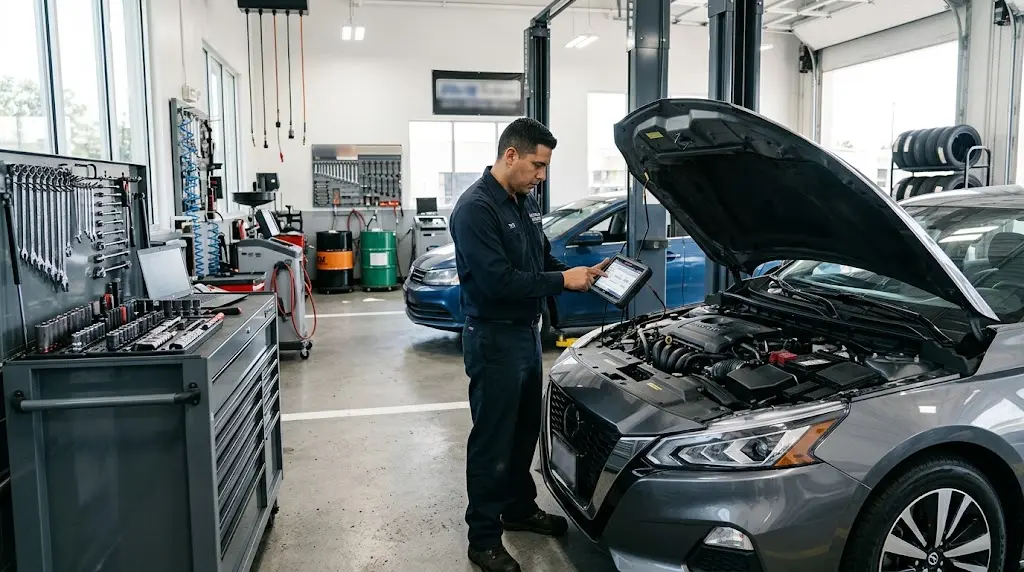
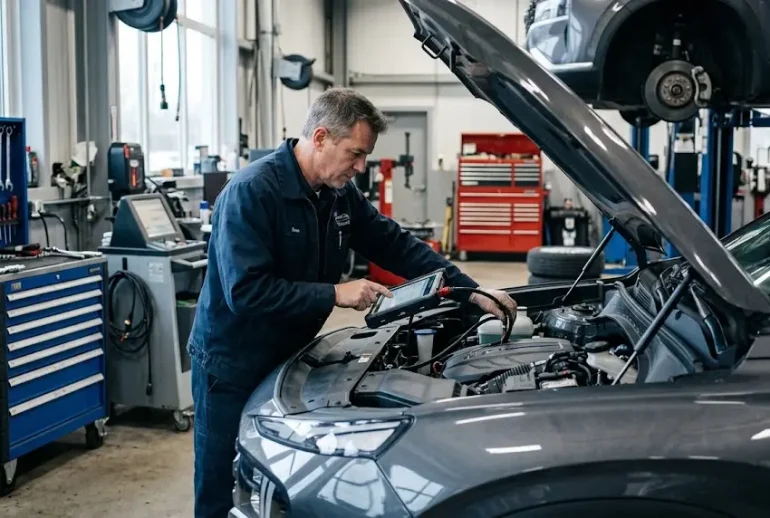
Modern vehicles use sensors, control modules, and electronic systems to monitor performance and detect certain faults. Diagnostic equipment can retrieve stored trouble codes and other information, but a code does not automatically identify the exact part that needs replacement.
A useful diagnostic process may include reviewing the driver’s description, examining relevant systems, retrieving diagnostic information, performing targeted tests, and confirming whether a proposed repair addresses the underlying problem.
For example, an engine warning light may be associated with a sensor reading, ignition issue, emissions-related problem, or another condition. Replacing a component solely because its name appears in a trouble-code description can lead to unnecessary expense.
When comparing automotive service providers, drivers can also review guidance about choosing quality auto care.
Preventive Maintenance: How to Reduce Avoidable Vehicle Problems
Preventive maintenance involves inspecting and servicing vehicle components according to manufacturer recommendations and actual operating conditions. It cannot guarantee that a vehicle will never break down, but it can help identify wear, leaks, and other developing concerns.
A Practical Maintenance Checklist
- Tyres: Check pressure, tread condition, visible damage, and uneven wear.
- Engine oil: Follow the correct specification and service interval.
- Coolant: Monitor levels when safe and investigate repeated losses.
- Brakes: Pay attention to unusual noises, pedal changes, and warning lights.
- Battery: Investigate slow starting and charging problems.
- Lights: Check headlights, brake lights, indicators, and other essential lighting.
- Wipers: Replace worn blades that reduce visibility.
- Filters: Follow the manufacturer’s guidance for engine and cabin air filters.
- Suspension: Investigate unusual vibration, knocking, or changes in handling.
- Service records: Keep invoices, inspection results, and maintenance dates.
Maintenance requirements vary by vehicle type, age, mileage, and driving conditions. Vehicles exposed to extreme temperatures, frequent short trips, heavy loads, or dusty environments may require additional attention as specified by the manufacturer.
What Does Fast and Reliable Auto Service Actually Mean?
Speed is convenient, but repair quality and safety should come first. A reliable workshop should provide realistic timelines, explain diagnostic uncertainty, and communicate when additional work becomes necessary.
A straightforward service appointment may involve checking the vehicle’s history, discussing symptoms, conducting an inspection, preparing an estimate, receiving approval, completing the work, and verifying the repair where appropriate.
Some jobs are relatively simple, while intermittent electrical faults, complex engine problems, and parts availability can affect completion times. Be cautious of guaranteed turnaround promises that do not account for the vehicle’s condition or the required diagnosis.
Understanding Repair Estimates and Automotive Service Costs
Repair costs vary depending on the vehicle, labour requirements, parts, location, and complexity of the fault. Instead of judging an estimate only by its total, review what is included.
A useful estimate should explain:
- The issue identified or the diagnostic work proposed.
- The parts expected to be replaced or repaired.
- Estimated labour and parts charges.
- Applicable taxes, fees, and additional costs.
- Whether further approval is required if the diagnosis changes.
- Any parts or workmanship warranty, including exclusions.
Ask whether the repair is immediately necessary for safety, recommended for preventive maintenance, or optional. Understanding this distinction can help drivers prioritise spending without overlooking important issues.
Choosing Replacement Parts for Your Vehicle
Replacement parts may be available as original-equipment components, aftermarket alternatives, or remanufactured parts. Suitability depends on the specific component, vehicle, supplier, and application.
Ask the workshop to explain which parts are being recommended, why they are appropriate, and what warranty coverage applies. A lower initial price does not always represent the best long-term value, but a more expensive component is not automatically necessary for every repair.
For safety-critical systems such as brakes and steering, correct specifications and proper installation are particularly important.
How Driving Conditions Affect Maintenance Needs
City Commuting and Stop-and-Go Traffic
Frequent braking, short journeys, and extended idling can influence vehicle wear and operating conditions. Drivers should pay attention to brake performance, battery health, fluid maintenance, and tyre condition.
For broader transportation planning, explore daily commuting and carpool logistics.
Highway and Long-Distance Travel
Before a long drive, inspect tyres, lights, fluids, wipers, and other essential components. Resolve warning lights and unusual mechanical symptoms before departure whenever possible.
Drivers preparing for scenic road trips can combine vehicle checks with destination planning, including guides to travel destinations in Southern Italy where applicable. Always check the requirements and road conditions of the destination.
Hot Weather and Demanding Terrain
High temperatures can place additional demands on cooling systems, batteries, and tyres. Check manufacturer-recommended tyre pressure, investigate overheating symptoms, and avoid operating a vehicle with known cooling-system faults.
For specialised driving conditions, see sand-driving tyre preparation tips. Off-road driving requires appropriate equipment, training, and consideration of vehicle limitations.
Electric and Hybrid Vehicle Maintenance
Electric and hybrid vehicles share many maintenance needs with conventional vehicles, including tyre inspections, suspension checks, cabin filters, and brake-system care. However, their high-voltage electrical systems and specialised components introduce additional safety requirements.
Only appropriately trained professionals should work on high-voltage systems. Vehicle owners should never attempt to open or repair a traction battery without the required qualifications and equipment.
Learn more about electric mobility and battery technology.
When Should You Seek Immediate Automotive Assistance?
Some vehicle problems should not wait for a routine maintenance appointment. Seek appropriate assistance if you experience:
- Significantly reduced braking ability.
- Severe steering difficulty or loss of steering control.
- Engine overheating accompanied by warnings or steam.
- A damaged tyre, visible sidewall bulge, or sudden loss of tyre pressure.
- Smoke, burning smells, or suspected fuel leaks.
- Severe vibration or unusual mechanical noises that make driving unsafe.
If a serious problem develops while driving, move to a safe location when possible, stop the vehicle, and arrange roadside assistance or towing as appropriate. Do not assume that every automotive workshop provides mobile emergency services or towing; confirm availability before relying on it.
How to Evaluate Pastors Auto Service Before Booking
Drivers considering Pastors Auto Service should verify current business details and ask questions relevant to their vehicle. Useful questions include:
- Does the workshop service my vehicle’s make, model, and powertrain?
- Can it explain the diagnostic process before recommending repairs?
- Will I receive a written estimate before work begins?
- What technician qualifications apply to the required repair?
- What parts options and warranties are available?
- How will the workshop communicate unexpected findings or delays?
- Are appointments, same-day repairs, or emergency services currently offered?
Comparing answers across providers can help identify a workshop that matches your needs, budget, and expectations. Other automotive service guides on NovaSpath can provide useful background, including Branson Tire & Auto Service and vehicle service considerations in Temecula.
Frequently Asked Questions About Pastors Auto Service
What services should I ask Pastors Auto Service about?
Ask whether the workshop currently provides oil changes, brake inspections, engine diagnostics, tyre services, battery testing, suspension repairs, and any specialised work your vehicle requires. Service availability should be confirmed directly.
How often should a vehicle receive routine maintenance?
Follow the maintenance schedule in the owner’s manual. Recommended intervals depend on the vehicle, component, driving conditions, and manufacturer specifications.
Can regular maintenance prevent every breakdown?
No. Routine maintenance can help identify wear and developing faults, but unexpected failures can still occur. Promptly investigating warning signs is an important part of reducing avoidable risks.
How can I tell whether an auto repair estimate is reasonable?
Request an itemised estimate, ask why each repair is needed, compare parts and labour details, and consider obtaining a second opinion for significant non-emergency work.
Does Pastors Auto Service offer emergency or same-day repairs?
Current emergency availability and turnaround times have not been independently confirmed for this guide. Contact the business directly before making plans based on those services.
What should I do if my check-engine light comes on?
Check the owner’s manual and arrange diagnosis. A flashing check-engine light can indicate a condition that risks serious damage; follow the manufacturer’s instructions and stop driving when necessary.
Final Thoughts
Reliable vehicle care begins with informed decisions, routine inspections, accurate diagnostics, and clear communication. Whether you are researching Pastors Auto Service or comparing other repair providers, understanding your vehicle’s maintenance needs helps you ask better questions and prioritise safety.
Before booking, verify the workshop’s actual services, credentials, opening hours, pricing, and warranty terms. Combine that information with the manufacturer’s maintenance schedule and professional advice appropriate to your vehicle.
Consistent maintenance cannot eliminate every mechanical problem, but it can support safer driving, more predictable ownership costs, and dependable vehicle performance over time.