Meal prep for beginners does not have to mean eating the same bland chicken and rice five nights in a row. At its heart, meal prep is simply a way of deciding what you will eat before the week gets busy, doing the heavy cooking in one relaxed session, and letting your future self say thank you on a tired Tuesday evening. If you have never tried it, the trick is to start small: one protein, one grain, a couple of vegetables and a sauce or two can become a week of dinners that actually taste different from each other.
This guide walks you through the whole process, from planning and shopping to batch cooking, safe storage and the small mistakes that put most beginners off. By the end, you will have a repeatable system that saves money, cuts food waste and turns the daily “what is for dinner?” question into a decision you have already made.
Why Meal Prep for Beginners Works So Well
The biggest benefit is not the cooking itself but the thinking you remove from your week. When a plan already exists, you are far less likely to order takeaway at the last minute or wander the supermarket hungry, buying ingredients that never become a meal. A single planned shop also tends to cost less than four or five small ones, because every item on the list has a job to do.
There is a health angle too. Home-cooked food usually means you control the salt, sugar and portion sizes, and a planned week makes it easier to balance richer dinners with lighter ones. If you enjoy eating out as well, meal prep does not have to replace it; many people prep weekday dinners and keep weekends free for places like the best restaurants on the water or a favourite local spot.
Start With a Simple Weekly Plan
Begin by looking at your real week, not an ideal one. Mark the evenings when you will be home late, eating out or too tired to cook anything ambitious. Most beginners do best by planning four or five dinners and leaving the remaining nights flexible for leftovers, a freezer backup or eating with friends.
Next, choose a loose theme for each night. Themes make planning faster because they narrow your choices: a pasta night, a stir-fry night, a tray-bake night, a soup or curry night and a “use it up” night built from whatever is left. Write the plan somewhere visible, and keep a running list of meals your household genuinely enjoyed; that list becomes your shortcut in future weeks. The same less-is-more thinking that works for a capsule wardrobe works in the kitchen too: a small set of reliable staples, combined in different ways, beats an overstuffed cupboard of single-use ingredients.
The Beginner’s Shopping List Strategy
Shop from your plan, not from inspiration. Organise the list by section of the shop (produce, proteins, grains and dry goods, dairy, frozen) so you move through the store once instead of zig-zagging. A practical beginner’s basket looks like this:
- Proteins: one or two, such as chicken thighs, eggs, lentils, chickpeas or firm tofu.
- Grains and bases: rice, pasta, couscous or wraps that can carry several different meals.
- Vegetables: a mix of hardy vegetables that last all week (carrots, peppers, onions, cabbage) and quick ones for early in the week (salad leaves, spinach, tomatoes).
- Flavour builders: a curry paste, a jar of pesto, soy sauce, tinned tomatoes, stock cubes, garlic and one fresh herb.
- Breakfast and snack backups: oats, yogurt and fruit so the plan covers more than dinner.
Buy versatile ingredients rather than recipe-specific ones. A whole chicken, for example, can be roasted on Sunday, sliced into wraps on Monday and turned into soup on Wednesday. Frozen vegetables deserve a place in every beginner’s plan: they are prepped already, keep for months and rescue a meal when fresh supplies run low.
Batch Cooking the Building Blocks
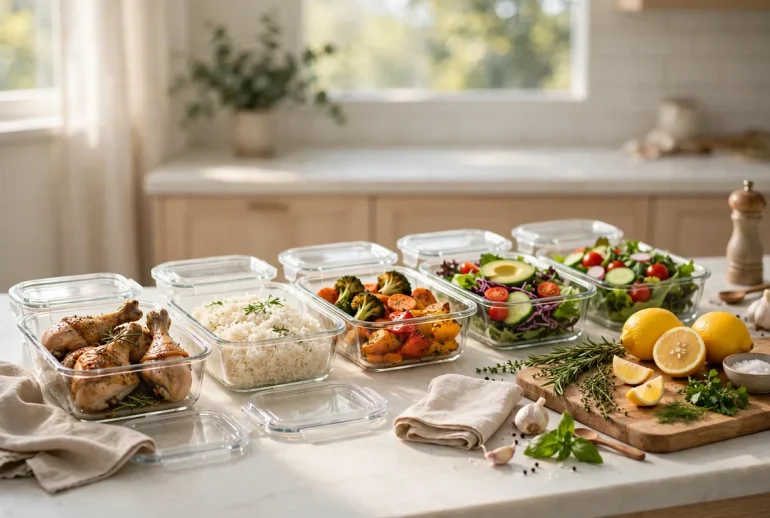
Set aside roughly two hours, put on some music, and cook components rather than complete meals. Start with whatever takes longest: grains go on first, then proteins in the oven, then vegetables on the stovetop. While everything cooks, wash salad leaves, portion snacks and mix a sauce or dressing.
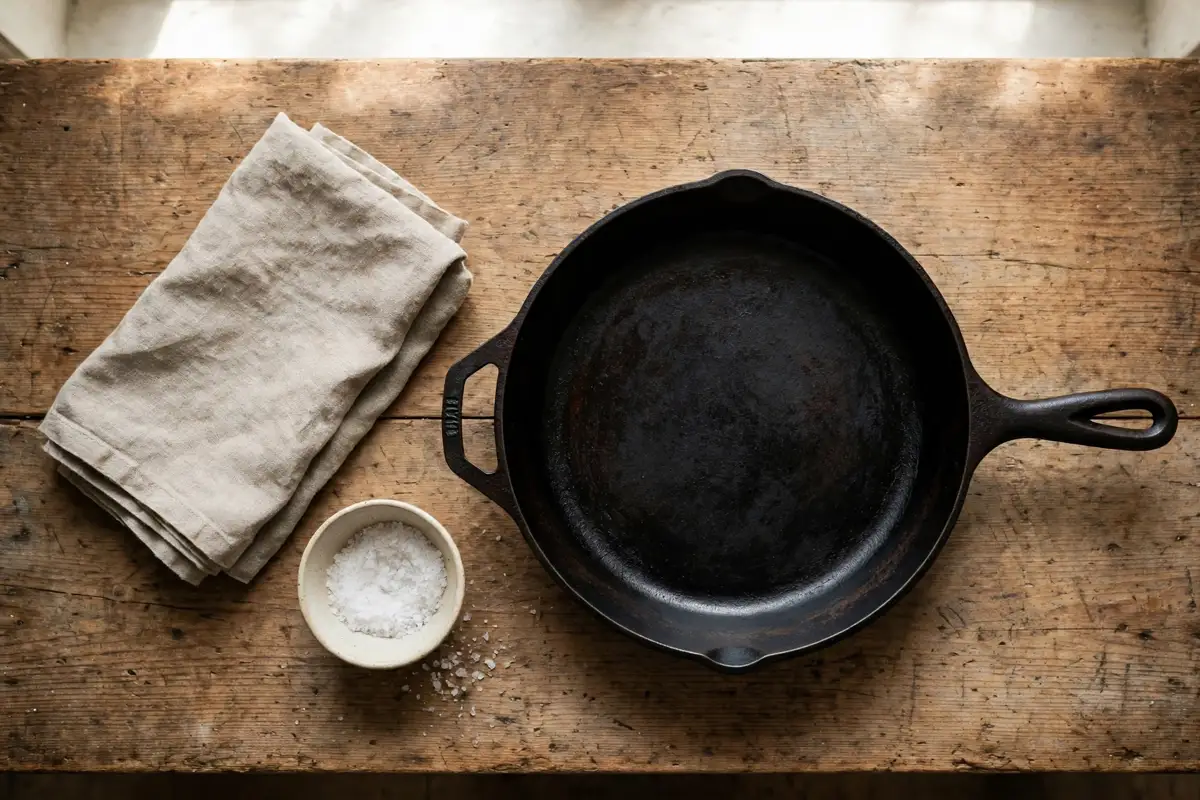
Good cookware makes this easier than people expect. A heavy pan you trust, for example, will sear chicken properly and double as a serving dish; if you own cast iron, our guide to cast iron skillet care explains how to season and store it so it lasts for decades. Work clean as you go: a tidy counter and a reasonably organised kitchen, much like the calm spaces in our home decor guide, make the whole session feel manageable instead of chaotic.
Season components simply (salt, pepper, oil, one spice blend) and keep strong sauces separate. That way the same chicken can sit in a curry one night and in a Mediterranean wrap the next without the flavours fighting.
Storage and Food Safety Basics
Cool cooked food quickly, portion it into shallow containers and refrigerate it within two hours of cooking. Most cooked grains, meats and vegetables keep well for three to four days in the fridge, so plan to eat the most perishable meals early in the week and freeze anything intended for Thursday or Friday. Label containers with the dish and the date; future you will not remember which tub is which.
Reheat food until it is steaming hot all the way through, and only reheat rice and other grains once. When in doubt, trust the simple rules: if it smells off or has sat out too long, throw it away. Food poisoning is a far more expensive lesson than one wasted portion.
A Sample Week of Beginner Dinners
Here is how the building blocks come together across five evenings. Sunday is your cooking session: roast chicken, a pot of rice, a tray of roasted vegetables and a simple tomato sauce.
- Monday: Roast chicken, rice and roasted vegetables, much as you cooked them.
- Tuesday: Chicken stir-fry with peppers, cabbage and soy-garlic sauce, using the same rice.
- Wednesday: Pasta with the tomato sauce, chickpeas and spinach stirred through.
- Thursday: Chicken and vegetable soup from the remaining carcass or stock, with crusty bread.
- Friday: “Use it up” wraps or fried rice with whatever vegetables and protein are left.
Notice that nothing repeats exactly, even though almost everything came from one shop and one cooking session. After a long week, that Friday-night feeling of having dinner handled pairs nicely with a small treat, whether that is dessert or a well-earned espresso old fashioned at the weekend.
Common Beginner Mistakes to Avoid
The most common mistake is over-ambition: seven brand-new recipes, exotic ingredients and a four-hour cooking marathon. It works once and never again. Start with two or three familiar dishes and repeat them until the system feels boring; boring is sustainable. The second mistake is prepping complete, identical meals. Components stay flexible and taste fresher than five copies of the same box.
Finally, do not buy special containers, gadgets or a new cookbook before your first session. Use what you own, learn what your week actually needs, and upgrade slowly. Meal prep for beginners succeeds when it fits your life as it is, not the life in a glossy photograph.
Your First Session, Simplified
Pick five dinners, write one shopping list, cook the components in a single session, store them safely and eat the most perishable food first. That is the entire system. Repeat it for a month and you will have a personal rotation of meals, a shorter grocery bill and a noticeably calmer weeknight routine. Start this Sunday; your Tuesday-evening self will be glad you did.