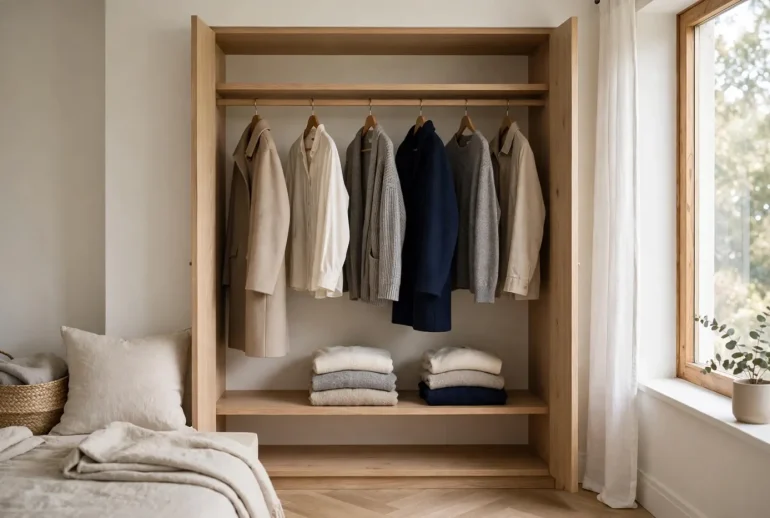
Most closets follow a familiar pattern: packed with clothes, yet the same handful of outfits come out every week. A capsule wardrobe fixes that problem by cutting your closet down to a small set of versatile pieces that all work together. Instead of buying more, you keep fewer, better items — and getting dressed becomes faster, calmer and a lot cheaper.
This guide walks you through building your first capsule wardrobe step by step, from the honest closet audit most people skip to the simple rules that keep your capsule working season after season.
What Is a Capsule Wardrobe?
A capsule wardrobe is a compact collection of clothing — often somewhere between 30 and 50 pieces, including shoes — chosen so that nearly everything mixes and matches. The idea is not to own as little as possible. It is to own only what you actually wear, in colors and cuts that combine easily, so a small closet produces a large number of outfits.
The approach suits almost any lifestyle. Office workers use it to simplify weekday mornings, frequent travelers use it to pack light, and anyone tired of impulse purchases uses it to spend with intention. The same less-but-better thinking works elsewhere in the home, too — our guide to creating a stylish, comfortable home applies a similar idea to the rooms you live in.
Step 1: Audit What You Already Own
Start by taking everything out of your closet and drawers. Yes, everything. Seeing the full pile is what makes the next decisions honest. Sort each item into four groups:
- Love it and wear it often — these are your capsule candidates.
- Love it but rarely wear it — ask why. Poor fit and awkward pairings are fixable; a style you have outgrown is not.
- Keep for a specific reason — formalwear, seasonal gear and sentimental pieces can live in a small separate storage box, outside the capsule.
- Let it go — anything unworn for a year, worn out, or bought for a life you do not live goes to donation or resale.
Notice your patterns as you sort. Most people discover they reach for the same colors, fabrics and silhouettes again and again. That pattern is the blueprint for your capsule.
Step 2: Choose a Color Palette That Mixes
A capsule only works if the pieces combine, and color is what makes combining effortless. Build your palette in three layers:
- Base neutrals — two or three of black, navy, grey, white, beige or denim. These carry most outfits.
- Supporting tones — softer shades that sit comfortably next to your neutrals.
- Accent colors — one or two bolder shades you genuinely enjoy, used in tops, scarves and accessories.
When every new piece has to earn its place against this palette, mismatched impulse buys quietly disappear. Your personal style still leads the decisions — the same way a design choice like a tattoo is personal and deliberate, as the ideas in our article on tattoo designs that speak volumes show, your wardrobe should say something intentional about you, not just fill rail space.
Step 3: Build Your Capsule Wardrobe Core Pieces
With the audit done and colors chosen, assemble the core. Exact numbers vary, but a balanced starter capsule often includes:
- 7–10 tops that layer well (plain tees, shirts, knitwear)
- 3–5 bottoms (jeans, tailored trousers, one skirt or shorts option)
- 2–3 layering pieces (a blazer, a cardigan, a versatile jacket)
- 2–3 dresses or one-piece outfits, if they fit your routine
- 3–4 pairs of shoes that cover work, casual and dressy occasions
Fit matters more than quantity. One pair of trousers that fits properly will out-earn three that almost do. If a statement piece is part of your style — the kind of outfit planning that goes into standing out at a pageant or event — keep it, but store occasion pieces outside the everyday capsule so they do not distort your daily choices.
Step 4: Fill the Gaps Slowly
Live with your capsule for a few weeks before buying anything. The gaps that remain after real use are your true shopping list: perhaps a warmer layer, a belt that works with everything, or shoes that bridge casual and smart. Buy those pieces deliberately, one at a time, favoring sturdy fabrics and clean construction.
This is where the capsule quietly saves money. A short, honest list replaces trend-chasing, and cost-per-wear drops because everything gets worn. Think of it like the cookware principle in our cast iron skillet care guide: a few quality tools, looked after properly, beat a drawer full of gadgets you never touch.
Keeping Your Capsule Working
Review the capsule at each season change. Move out-of-season items to storage, note what wore out, and adjust quantities to your real life — a new job, a climate change or a different commute can all shift what “essential” means. A useful rule for new purchases is one-in, one-out: a new piece joins only when a similar one leaves.
Capsules also make travel dramatically easier. When everything matches, a carry-on holds a week of outfits — a trick that pairs well with the planning approach in our budget road trip guide, where packing light keeps the whole trip simpler.
How Long Does It Take to Settle In?
Give the capsule one full season before you judge it. The first two weeks feel strange — you will reach for variety out of habit — but by the second month most people report the opposite problem: getting dressed takes two minutes and they cannot imagine going back. Keep a short note on your phone of anything you genuinely missed or wished you had. That note, written from real life rather than a shopping mood, becomes your precise shopping list for the next season, and it is usually surprisingly short.
If your household shares laundry and storage space, agree the ground rules early: what counts as part of the capsule, where out-of-season storage lives, and how the one-in, one-out rule applies to gifts. A capsule maintained by shared agreement lasts; one policed by one person quietly collapses.
Common Mistakes to Avoid
Throwing out too much at once. Box up doubtful items for a month instead of donating them immediately; if you never reach for the box, letting go is easy. Copying someone else’s list is another trap — a capsule built around another person’s job and climate will fail you by week two. Finally, ignoring your real routine (school runs, site visits, gym sessions) produces a beautiful closet that does not serve your actual days.
Build your capsule wardrobe around the life you live, review it twice a year, and let every piece earn its hanger. A smaller closet, chosen well, gives you more outfits — not fewer — and one less decision to make every morning.