Choosing running shoes for beginners feels harder than it should. Shelves are full of bright models, prices range from forty dollars to two hundred, and every box promises speed, comfort, or both. The good news is that you do not need to understand every technology on the wall. You need a pair that fits your feet, suits the ground you run on, and lets you finish a run without pain.
This guide walks through the whole decision in plain steps. You will learn how to read your own feet, what the main shoe types do, how to test fit in a store, and how much you should spend on your first pair.
Start With How You Run, Not How Shoes Look
Most beginners pick shoes the way they pick trainers for everyday wear: by colour and brand. Running is different. A shoe that looks great can still rub your heel raw by mile two, while a plain pair can carry you comfortably for months. Put looks last and fit first.
Think about where you will actually run. Pavement, park paths, and treadmills all call for road shoes with smooth, grippy soles. Trails with mud, roots, and loose stones need lugged soles and tougher uppers. If you plan to mix both, start with a road shoe and add a trail pair later, once running becomes a habit.
Also think about how often you will run. Two short runs a week place very different demands on a shoe than five runs a week. A beginner who runs twice a week can choose a simple, comfortable daily trainer and be happy for a long time. That is the category to ask for in a shop: a neutral daily trainer.
Know Your Foot and Your Gait
Your arch shape changes which shoes feel best. A quick home test helps. Wet the sole of your foot, step onto a paper bag or a dry pavement slab, and look at the print. A full print with little curve means a low arch. A thin strip joining heel and forefoot means a high arch. A print with a clear curve in the middle means a medium arch.
Low arches often roll inward as you run, which is called overpronation. These runners usually feel better in stability shoes, which add firm material on the inner side to slow the roll. High arches tend to roll outward and need cushioning more than control. Medium arches suit neutral shoes, the most common type.
Many running shops offer a free gait check. You run for a few seconds on a treadmill while staff watch your feet, or a camera records your stride. It takes five minutes and it is worth doing, because it turns a guess into a fact. If a shop offers it, take it. A local sports community can also point you to shops that do proper fittings.
Match the Shoe to Where You Run
Road shoes are built for hard, even surfaces. Their soles are smooth, their cushioning is soft, and they are light. They are the right first buy for most beginners, because most first runs happen on pavements, park paths, or a treadmill.
Trail shoes add grip and protection. The soles have deep lugs, the toe is guarded by a bumper, and the upper resists tears. They feel clumsy on tarmac but sure-footed on rough ground. Buy them only if most of your running will be off road.
Racing shoes are a third type, and beginners should skip them. They are light and fast, but they give up cushioning and durability to save weight. They suit experienced runners chasing a personal best, not someone building a habit. Your first pair should protect your legs, not shave seconds off your time.
Get the Fit Right
Fit is where most beginners go wrong. Running shoes should feel roomy at the front and secure at the back. Aim for a thumb width of space between your longest toe and the end of the shoe. Your heel should stay put when you walk, with no slipping or lifting.
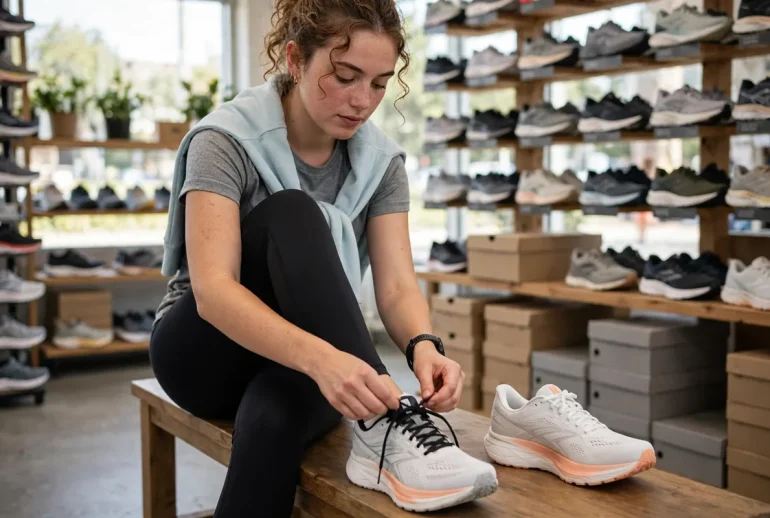
Shop in the afternoon if you can. Feet swell through the day, and a shoe that fits at nine in the morning can pinch by evening. Wear the socks you plan to run in, and bring your old shoes. The wear pattern on the old soles tells a fitter a lot about how you move.
Try on at least three pairs. Run a short loop in the shop, or jog on the spot for thirty seconds. Pay attention to three things: does the heel slip, does the arch feel supported without pressure, and do your toes have room to spread? If any answer is no, try another size or model. A good shop expects this and will not rush you.
Here is a real example. A friend of mine bought her first pair online because they were on sale. They were her usual size, but her toes went numb after ten minutes of running. She measured her feet properly, found she needed a half size larger in that brand, and the numbness vanished on her next run. Sizes vary between brands, so treat the number on the box as a starting point, not a rule. Recovery matters too, and comfortable feet help you keep moving between runs, much like good local health services support an active life.
How Much Should You Spend
Most beginners do well in the eighty to one hundred and forty dollar range. Below that, cushioning and build quality drop fast. Above it, you pay for racing features and lighter materials you do not need yet.
Last season models are the best bargain in running. Shops discount them when the new version arrives, and the changes between versions are usually small. A one hundred and thirty dollar shoe from last year often sells for eighty, and it will serve a beginner just as well.
Do not buy two pairs at once. One good pair is enough to start. Once you run regularly for three months, you will know what you like and what you want to change, and then a second pair makes sense.
Break Them In the Smart Way
New shoes need a short break-in period. Wear them around the house for a day, then take them for a short, easy run. If anything rubs or pinches in the first two runs, that is a fit problem, not a break-in problem. Most shops will exchange unworn or lightly used shoes within thirty days, so keep the receipt and the box.
Rotate your socks as carefully as your shoes. Thin, moisture-wicking running socks cut blisters far better than cotton ones. Cotton holds sweat against the skin, and wet skin blisters fast. A three pack of running socks costs less than one takeaway meal and saves you weeks of sore feet.
Keep a simple log for your first month. Note the date, the distance, and any aches. Patterns show up quickly: sore knees after long runs, a hot spot on one heel, or tight calves on hills. That log is gold when you buy your second pair, because it tells you exactly what to fix. Training with friends also helps you stay honest about the log, and joining a local sports group is an easy way to find running partners.
When to Replace Your Shoes
Most running shoes last between three hundred and five hundred miles. The midsole foam wears out before the upper looks tired, so a shoe can look fine and still stop protecting your legs. If your knees or shins start aching after runs that used to feel easy, worn shoes are a likely cause.
Check the outsole for smooth, worn patches, especially under the heel and the ball of the foot. Press the midsole with your thumb. Fresh foam springs back. Dead foam stays dented. When two of these signs show up together, start shopping for a replacement.
One simple trick is to write the purchase date on the inside of the tongue with a marker. It takes five seconds and stops the guesswork later. Pair that with your log, and you will never wonder whether your shoes are done.
Your First Run Starts With the Right Pair
Running shoes for beginners come down to four checks: a neutral daily trainer for your surface, the right support for your arch, a thumb width of space at the toes, and a price that leaves room for good socks. Get those four right and the rest is practice.
Buy from a shop that lets you try before you commit, keep the receipt, and give the shoes two easy runs before you judge them. Your feet will tell you the truth quickly. If you want more ideas for staying active, explore guides on sport and movement, everyday wellness, and a simple beginner routine for looking after yourself after a run.