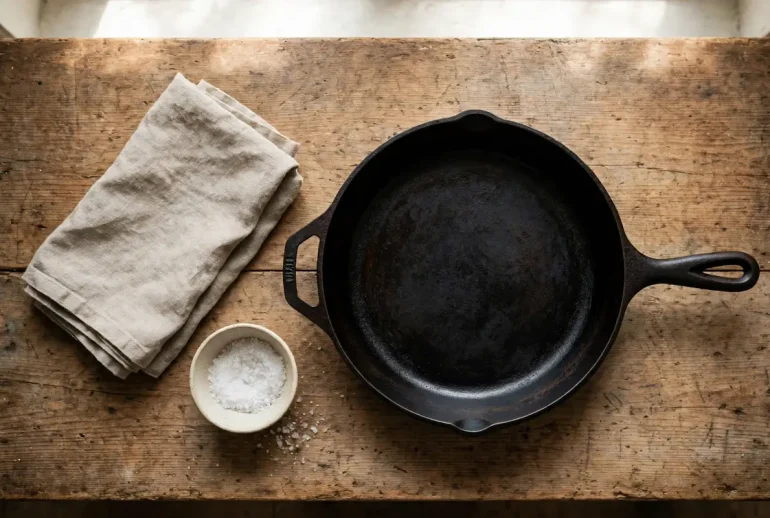
A cast iron skillet is the rare kitchen tool that genuinely gets better the longer you own it — but only if you look after it. Good cast iron skillet care is not complicated, and it does not involve the long list of warnings that puts many new owners off using their pan. It comes down to three simple habits: keep the seasoning healthy, clean the pan without stripping that seasoning away, and store it completely dry. This guide walks through each habit step by step, explains how to rescue a rusty skillet, and covers the everyday mistakes that quietly shorten the life of an otherwise indestructible pan.
Why cast iron rewards a little attention
Cast iron’s famous non-stick surface is not a factory coating. It is seasoning: very thin layers of oil that have been heated until they harden and bond to the metal. Every time you cook with fat, you add a microscopic amount to that layer, which is why a ten-year-old skillet that has cooked a thousand breakfasts releases eggs better than a brand-new one. Seasoning also protects the iron itself, because bare cast iron rusts quickly when it stays wet.
Restaurant kitchens prize these pans for exactly the same reasons home cooks do — fierce, even heat and a surface that improves with work. If you enjoy comparing home cooking with eating out, our guide to the best restaurants on the water shows the kind of dishes chefs build around that sear. The good news is that with basic care, your own skillet can produce the same crust at home for decades.
How to season a cast iron skillet
Seasoning sounds technical, but the process is forgiving. You are simply baking a whisper-thin coat of oil onto the metal. Follow these steps for a new pan, a second-hand find, or a skillet you have stripped back to bare iron:
1. Wash and dry the pan thoroughly. Warm, soapy water is fine at this stage. Dry it with a towel, then set it on a low hob for a minute or two so every drop of water evaporates.
2. Apply a very thin layer of oil. Rub a small amount of a neutral, high-smoke-point oil — grapeseed, sunflower or plain vegetable oil all work — over the whole pan, inside and out, then wipe it away with a clean cloth until the pan looks dry. Too much oil is the main cause of sticky, patchy seasoning.
3. Bake it upside down. Place the skillet upside down in an oven heated to around 230–250°C (450–500°F), with foil on the rack below to catch drips. Bake for one hour.
4. Let it cool in the oven. Cooling slowly protects the fresh layer. For a new or stripped pan, repeat the oil-and-bake cycle two or three times; for a pan in regular use, ordinary cooking maintains the finish from here.
Cleaning your skillet after everyday cooking
Daily cleaning is where most myths live. The old rule that soap must never touch cast iron dates from the era of harsh lye soap; a small amount of modern washing-up liquid on a soft sponge will not strip a well-seasoned pan. What actually causes damage is soaking. Never leave a skillet sitting in water, and never put it in a dishwasher — the long, wet cycle rusts the surface and ruins the seasoning.
For stuck-on food, simmer a little water in the pan for a few minutes and lift the residue with a wooden spoon, or scrub gently with a handful of coarse salt and a splash of oil. When the pan is clean, dry it on the hob over low heat and wipe the inside with the thinnest possible film of oil while it is still warm. That thirty-second habit after cooking is the single most useful part of cast iron skillet care, and it makes ambitious home cooking — recreating the flavours on the Restaurant Matsu Maui menu, for example — far less intimidating.
How to fix rust and stuck-on damage
Found a rusty skillet at a flea market, or neglected your own for a season? Light surface rust is easy to reverse. Scrub the spots with half a potato dipped in coarse salt, or with a non-metal brush and a little vinegar, then wash, dry and give the pan one full seasoning cycle as described above. For heavier rust, soak the skillet in a half-and-half mix of white vinegar and water for a few hours — check it hourly, because vinegar will eventually etch the iron — then scrub, rinse, dry immediately and apply two or three seasoning coats. A pan that looks beyond saving is usually one good afternoon away from another thirty years of service.
Storing your pan so it stays ready
Storage is simple once the pan is clean and seasoned: it must go away bone dry. A light film of oil guards against humid air, and if you stack skillets, a paper towel or cloth between them protects the cooking surface from scratches. Avoid storing cast iron anywhere damp, such as under the sink. Many cooks simply keep the skillet on the hob or hang it from a hook — visible, dry and ready, which is exactly where a hard-working pan belongs. A skillet kept this way makes weeknight cooking easier, whether you are searing steaks or taking inspiration from the best Mexican restaurants in Hernando, MS and frying your own fajitas at home.
Common cast iron mistakes to avoid
Most damaged skillets suffer from the same short list of errors. Soaking the pan overnight is the biggest; thermal shock is the sneakiest — running cold water into a smoking-hot skillet can warp or even crack the iron, so always let it cool a little first. Two quieter mistakes matter too: cooking only one type of food in the pan (varied cooking, especially frying and roasting, builds the most even seasoning), and giving up after the first sticky egg. A young seasoning layer is fragile; it toughens with use. Judge your pan after a month of regular cooking, not after its first breakfast.
A well-kept skillet slows cooking down in the best possible way and rewards patience — much like the slower pleasures we cover in our reflection on bible verses about beauty and our look at what goes into a thoughtful beauty transformation. Treat cast iron skillet care as a small ritual rather than a chore — season it properly, wash it kindly, dry it completely — and the pan you buy once will be the pan your grandchildren argue over.