As sensing systems become increasingly important in industrial, scientific, defense, and commercial environments, the ability to detect and measure energy across different wavelengths can be critical. Teledyne Judson addresses this need through single-element infrared detectors, focal plane arrays, integrated detector assemblies, cooling technologies, optics, and supporting electronics.
The company’s work also fits into a broader technology landscape that includes technology careers and innovation, advanced digital systems, and increasingly specialized sensing platforms.
What Is Teledyne Judson Technologies?
Teledyne Judson Technologies, commonly abbreviated as TJT, is part of Teledyne’s imaging and sensing ecosystem. The company focuses on infrared sensor technologies covering a broad portion of the electromagnetic spectrum.
Its portfolio includes single-element infrared detectors as well as two-dimensional focal plane arrays and Integrated Dewar Cooler Assemblies. Depending on the application, detector technologies can use materials such as InGaAs, HgCdTe, InSb, InAs, PbS, PbSe, and germanium.
This material diversity matters because different detector materials respond to different wavelength ranges and operating requirements. System designers can therefore select sensing technology according to factors such as spectral response, sensitivity, cooling requirements, speed, and the intended application.
Why Infrared Detection Matters
Infrared sensing allows systems to detect radiation outside the portion of the electromagnetic spectrum visible to the human eye. This capability is valuable when conventional visible-light imaging is insufficient or when a particular wavelength contains useful information about a material, environment, or process.
Infrared detectors can support applications involving thermal measurement, spectroscopy, gas detection, industrial process monitoring, scientific research, and imaging. In specialized environments, detector performance can influence the quality and reliability of the measurements produced by an entire system.
The importance of sensing technology is also connected to broader AI and technology trends, where high-quality sensor data can provide the raw information required for analysis, automation, and intelligent decision-making.
Teledyne Judson’s Infrared Detector Portfolio
Single-Element Infrared Detectors
Single-element detectors are designed for applications where a focused sensing element is more appropriate than a full imaging array. Teledyne Judson offers detectors using multiple semiconductor materials and configurations, allowing engineers to match detector characteristics with the wavelength and performance requirements of a particular system.
These detectors can be available in room-temperature, thermoelectrically cooled, or cryogenic configurations depending on the detector technology and application. Cooling can be important in applications where reducing detector noise is necessary to achieve the desired measurement performance.
InGaAs Detectors
Indium gallium arsenide, or InGaAs, is widely used for near-infrared and short-wave infrared detection. Teledyne Judson offers room-temperature InGaAs detectors designed for applications including NIR and FTIR-related systems, optical communications, and specialized measurement equipment.
Room-temperature operation can be valuable when system designers need a compact detector without the additional complexity of an external cooling system. The appropriate detector still depends on wavelength, sensitivity, active area, bandwidth, and system architecture.
HgCdTe Detectors
Mercury cadmium telluride, commonly written as HgCdTe or MCT, is another important infrared detector material. Teledyne Judson’s MCT technologies cover extended infrared wavelength ranges and can be used in applications such as thermal imaging, spectroscopy, infrared tracking, and laser detection.
Some MCT configurations require cooling to achieve their intended performance. Cryogenic and thermoelectric approaches can therefore form an important part of the overall detector design.
InSb and Other Detector Materials
Indium antimonide, or InSb, is another infrared detector material used for demanding applications. The broader Teledyne Judson portfolio also includes detector technologies based on InAs, lead sulfide, lead selenide, and germanium.
The availability of different materials allows engineers to select a detector according to the wavelength region and operating conditions rather than relying on one sensing technology for every application.
Focal Plane Arrays and Imaging
Beyond individual detector elements, Teledyne Judson’s portfolio includes two-dimensional focal plane arrays. These arrays allow multiple detector elements to work together as an imaging sensor, making them suitable for applications where spatial information is as important as the detection of infrared radiation.
Focal plane arrays can be relevant to surveillance, security, spectroscopy, laser diagnostics, chemical and biological detection, and other specialized imaging applications. Their usefulness depends on factors such as wavelength response, pixel architecture, cooling, sensitivity, readout electronics, and the requirements of the imaging system.
This type of sensor technology complements developments in modern digital technology, where imaging hardware increasingly works alongside software-based analysis and automated processing.
Integrated Dewar Cooler Assemblies
Some high-performance infrared detectors require controlled cooling. An Integrated Dewar Cooler Assembly, or IDCA, combines detector and cooling-related components into an integrated package intended to support infrared sensing applications.
Integration can simplify system design by bringing critical detector and cooling elements together. The exact configuration depends on the detector material, wavelength range, operating conditions, and performance requirements of the application.
Major Applications of Teledyne Judson Technologies
Spectroscopy
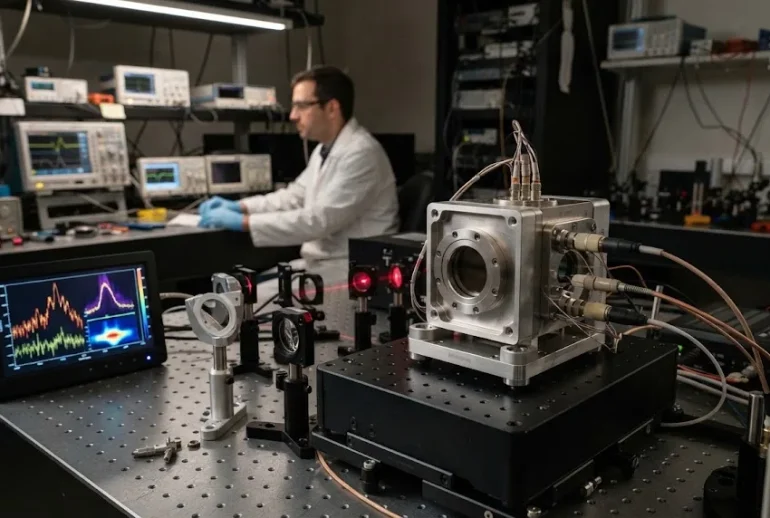
Spectroscopy is one of the important application areas for infrared detectors. Infrared measurements can help characterize materials by examining how they interact with different wavelengths of radiation.
Detector technologies can be used in systems serving pharmaceutical research, petrochemical applications, gas sensing, process control, paper manufacturing, recycling and sorting, and other analytical environments.
Thermal Imaging
Infrared detection is central to thermal imaging because objects emit thermal radiation that can be measured without relying on visible light. Specialized detector materials and cooled configurations can support demanding thermal measurement and imaging applications.
Thermal sensing is particularly valuable when temperature differences or infrared radiation provide information that cannot be obtained easily through conventional visible imaging.
Security and Surveillance
Infrared sensing can support surveillance and security systems by providing information beyond the visible spectrum. Depending on the wavelength and detector architecture, infrared systems can help monitor environments under challenging lighting conditions.
The technology is also relevant to broader security technology discussions, although specialized infrared sensing serves a very different technical purpose from software-based security tools.
Laser Diagnostics and Range Finding
Infrared detectors can be used to measure and analyze laser radiation. Detector response, wavelength sensitivity, speed, and noise characteristics can all influence the performance of a laser measurement system.
These capabilities can support research, industrial measurement, optical testing, and specialized range-finding applications.
Environmental and Gas Sensing
Some gases absorb infrared radiation at characteristic wavelengths. Infrared detector systems can therefore form part of instruments designed to identify or measure gases in environmental and industrial settings.
This application illustrates how sensor technology connects hardware, measurement science, and data analysis. Modern monitoring systems increasingly depend on accurate sensor inputs before analytical software can produce meaningful results.
Industrial Process Control
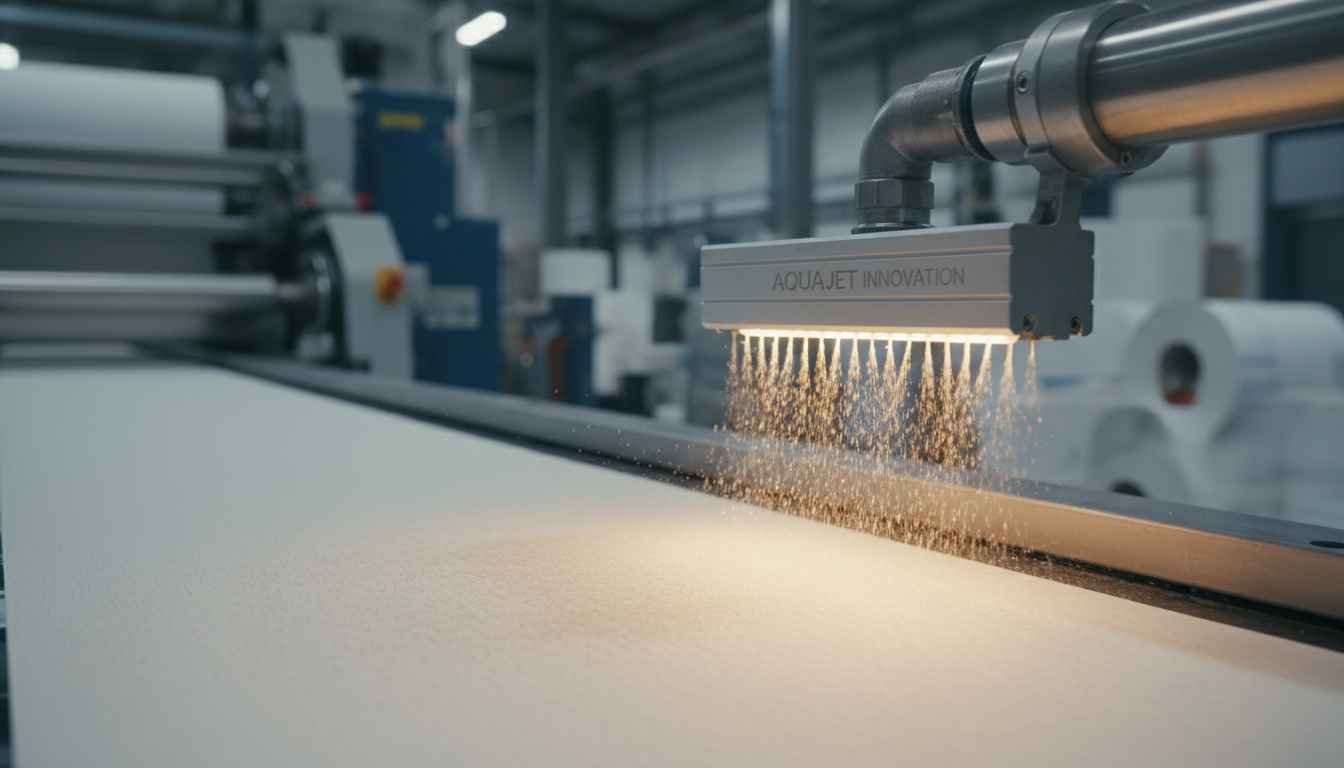
Manufacturing environments often require continuous measurement of materials and processes. Infrared sensing can support non-contact measurement and analytical systems where traditional visible inspection may not provide enough information.
When combined with appropriate optics, electronics, cooling, and signal processing, infrared detectors can become part of specialized instrumentation used to monitor industrial processes.
Why Detector Material and Cooling Matter
Choosing an infrared detector is not simply a matter of selecting the highest sensitivity available. Engineers need to consider the wavelength range, response speed, detector noise, active area, operating temperature, cooling method, optical configuration, and electronics required by the complete system.
For some applications, a room-temperature detector can simplify the design and reduce system complexity. In other applications, thermoelectric or cryogenic cooling may be justified because the measurement requires higher performance or lower noise.
This engineering tradeoff is similar to challenges found throughout industrial technology and process engineering, where component selection must be based on the requirements of the complete operating environment.
How Teledyne Judson Fits Into the Broader Teledyne Ecosystem
Teledyne Technologies operates across multiple technology segments, including digital imaging, instrumentation, aerospace and defense electronics, and engineered systems. Within this broader ecosystem, Teledyne Judson contributes specialized infrared sensing capabilities.
The relationship is important because advanced sensing increasingly requires more than an individual detector. Modern systems can combine detectors, optics, electronics, cooling, signal processing, imaging hardware, and software into integrated solutions.
This broader movement toward connected technical systems can also be seen in technology platforms built around specialized hardware and software, although the applications and engineering requirements are very different.
The Role of Advanced Sensing in Modern Technology
Advanced sensing is becoming increasingly important as industries seek better measurement, automation, monitoring, and decision-making capabilities. Sensors provide the physical-world data that digital systems need to understand conditions and respond appropriately.
In industrial and scientific applications, the quality of this initial measurement can have a direct impact on the quality of subsequent analysis. A detector with the right spectral response and operating characteristics can therefore be an important part of the overall system architecture.
The wider technology sector continues to evolve through digital transformation, including work involving digital transformation and legacy systems. Specialized sensing technologies can play a supporting role in these transformations when physical measurements need to be brought into modern analytical workflows.
What Makes a Good Infrared Sensing Solution?
A suitable infrared sensing solution should be selected according to the application’s actual technical requirements. Important considerations include:
- Spectral range: The detector must respond appropriately to the wavelengths being measured.
- Sensitivity: Detection performance needs to match the strength of the expected signal.
- Speed: Fast-changing applications may require detectors with suitable response characteristics.
- Cooling: The appropriate operating temperature and cooling method depend on the detector and application.
- Active area: Detector size affects optical design and system configuration.
- Electronics: Preamplifiers, signal processing, and readout components must be compatible with the detector.
- System integration: Optics, packaging, cooling, and electronics should work together as a complete sensing architecture.
Teledyne Judson Technologies and the Future of Sensing
The future of sensing is moving toward systems that combine specialized hardware with increasingly capable digital processing. Infrared detectors remain important because many scientific, industrial, environmental, and security applications depend on information that exists outside the visible spectrum.
Teledyne Judson’s combination of single-element detectors, focal plane arrays, cooling technologies, optics, and supporting electronics positions its technology within this broader sensing landscape. The company’s portfolio can support applications ranging from spectroscopy and gas sensing to imaging, laser diagnostics, and security.
As organizations continue investing in advanced technology infrastructure, specialized sensing components can become increasingly important parts of larger systems that collect, process, and interpret physical-world information.
Frequently Asked Questions
What does Teledyne Judson Technologies specialize in?
Teledyne Judson Technologies specializes in infrared sensing technologies, including single-element infrared detectors, focal plane arrays, and Integrated Dewar Cooler Assemblies.
What materials are used in Teledyne Judson infrared detectors?
The portfolio includes detector technologies using materials such as InGaAs, HgCdTe, InSb, InAs, PbS, PbSe, and germanium.
Do Teledyne Judson detectors require cooling?
Cooling requirements vary by detector technology and application. Some detectors can operate at room temperature, while other configurations use thermoelectric or cryogenic cooling.
What industries use infrared detectors?
Infrared detectors can support spectroscopy, environmental monitoring, gas sensing, industrial process control, imaging, security, laser diagnostics, and scientific applications.
Why are different infrared detector materials needed?
Different materials provide different spectral responses and operating characteristics. Selecting the appropriate material helps engineers match the detector to the wavelength range and performance requirements of the application.
Conclusion
Teledyne Judson Technologies represents a specialized part of the advanced sensing ecosystem, with infrared detector technologies designed for applications where accurate detection across different wavelengths is essential. Its portfolio includes single-element detectors, focal plane arrays, cooling assemblies, and related technologies that can support spectroscopy, imaging, environmental monitoring, security, laser diagnostics, and industrial measurement.
The broader importance of these technologies lies in their ability to convert physical infrared energy into useful information. As scientific instruments, industrial systems, and intelligent technologies become more sophisticated, reliable sensing remains a fundamental part of the architecture behind them.
For readers exploring the wider technology landscape, NovasPath also covers subjects ranging from AI-native technology trends to information technology growth, providing additional context around the technologies shaping modern digital and industrial environments.